Quick answer
Moss and lichen treatments can wash off your roof and into your rainwater tank, making the water foamy, soapy or chemical-tasting. Disconnect the downpipes before the roof is treated, and keep them off until rain has rinsed the roof clean. If chemical does get in, the tank has to be emptied, cleaned and refilled, and your filters changed. We can organise all of it.
- Disconnect the tank first
- Avoid slow-acting products
- Wait for good rain
- Foam in the tank? Call us
- We coordinate the clean-up
- Mangawhai to Albany
Foam or bubbles in your tank water? Call 0800 278 296

Every spring we get two or three calls a month about the same problem. Someone has had their roof washed and treated for moss and lichen, and a few weeks later their tank water is foamy, with scum or bubbles on top, or it tastes and smells of chemicals.
It’s an easy mistake to make, and an expensive one to fix. Here’s how it happens, and how to avoid it if you collect drinking water from your roof.
How roof chemicals end up in your tank
Moss, mould and lichen treatments are sprayed onto the roof. If the downpipes are still connected, or are reconnected too soon, the next rain washes the chemical off the roof and straight into your water tank. We see two main problems:
- The wrong product for a drinking water roof. Some treatments, like Wet & Forget, are designed to stay on the roof and keep working every time it rains, for months. That’s fine on a house on town water. On a roof that feeds your drinking water, it means chemical can keep washing into the tank for a long time. Even the manufacturer tells tank owners to disconnect the tank for weeks after treatment, and to check the water coming off the roof isn’t foaming before they reconnect.
- The right product, but the tank reconnected too soon. Other treatments are fine to use, but the downpipes have to stay off until rain has rinsed the roof clean. If the tank goes back on too early, the chemical washes in with the first heavy rain.

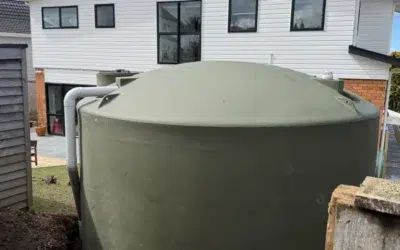
Lichen on a roof that feeds a rainwater tank. Treat it with the tank disconnected.
Signs your tank water has been contaminated
- Foam, scum or a film on top of the water in the tank.
- Bubbles, or water that looks aerated or milky at the tap.
- A soapy or chemical smell or taste.
- Filters that block up or discolour soon after the roof was treated.
Safety tip
Noticed any of these? Use bottled water for drinking and cooking, and call us on 0800 278 296. The sooner it’s dealt with, the less of your system it reaches.
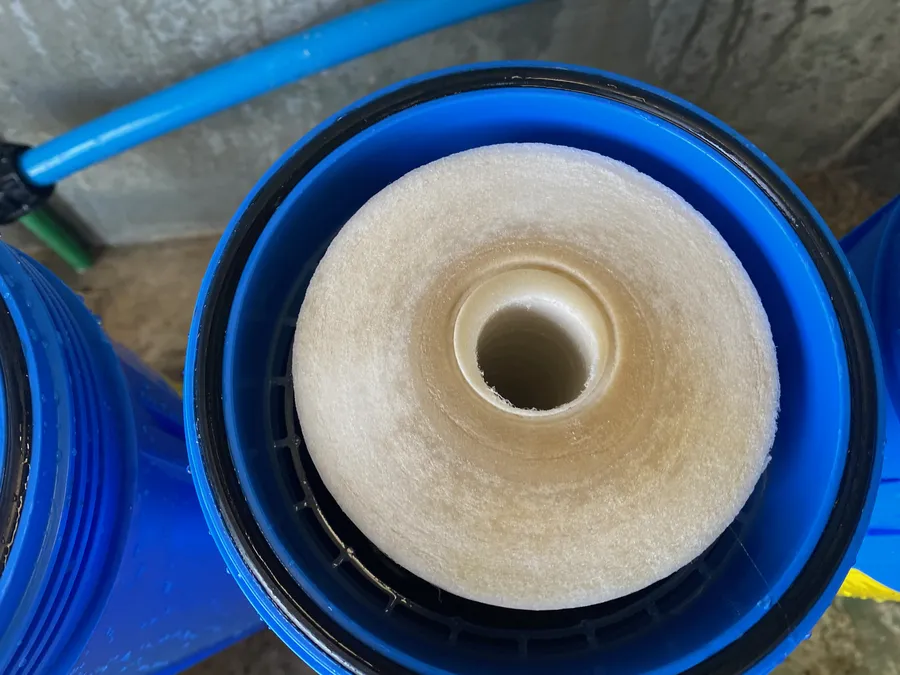
Filter cartridges that block or discolour soon after a roof treatment are a warning sign.
How to fix a contaminated tank
Unfortunately there’s no quick fix. Once the chemical is in the tank, the only real cure is to start again with clean water:
- Disconnect the tank from the roof, so no more chemical can wash in.
- Empty the tank completely. A tank cleaner pumps out all the water and the sediment on the bottom.
- Clean the inside. The tank is water blasted from the inside and thoroughly rinsed.
- Refill with clean water from a registered water carrier.
- Change the filters. We replace the contaminated filter cartridges, flush the UV system and the pipes, and get your tank water treatment running cleanly again.
That takes a few trades on site: a tank cleaner, a water carrier and us. We can coordinate it all for you if you’d like one point of contact. It adds up, which is why it’s worth getting right before the roof is treated.
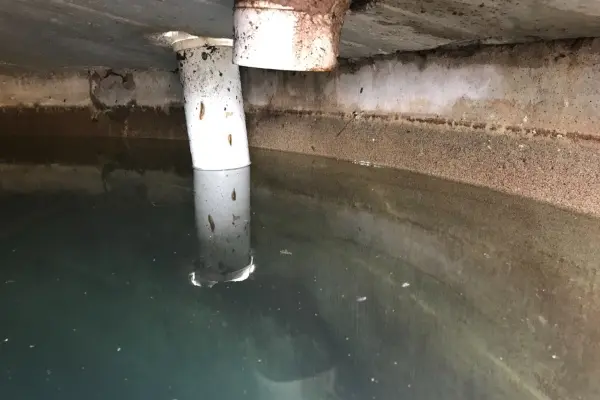
Once a chemical is in the water, the tank has to be emptied, cleaned and refilled.
Foam or bubbles in your tank water? Call us.
How to treat your roof without contaminating your tank
- Tell your roof cleaner you collect drinking water. Ask what product they’ll use, and whether the manufacturer says it’s suitable for a roof that supplies a drinking water tank.
- Avoid slow-acting treatments that are designed to keep working on the roof for months.
- Plan ahead. The tank may be disconnected for a few weeks, so make sure it’s reasonably full first.
- Disconnect the downpipes from the tank before the roof is washed or treated, and while the gutters are cleaned too.
- Keep them disconnected until the roof is rinsed clean. Follow the product’s instructions, wait for several good falls of rain, and check the water coming off the roof isn’t foaming or smelling before you reconnect.
- Clean the gutters and empty your first flush diverter before you reconnect.
The Ministry of Health’s guide to tank water says to choose roof paint that the manufacturer advises is suitable for roof water (Water collection tanks and safe household water). We’d treat roof chemicals the same way.

A first flush diverter keeps the first, dirtiest rain off the roof out of your tank. Empty it before you reconnect.
Already had the roof done?
If your roof has been treated recently and the tank is connected, keep an eye on the water. If you see foam or bubbles, or it smells or tastes of chemicals, call us. The sooner it’s dealt with, the less of your system it reaches.
Some roofs shouldn’t feed a drinking water tank at all, whatever you spray on them: see dangerous roof materials. For more on keeping tank water safe, see rainwater harvesting and tank water treatment.
Roof treatments and tank water: FAQs
Can I use moss killer on a roof that collects drinking water?
Only if the manufacturer says it’s suitable for a roof that supplies drinking water, and only with the tank disconnected until rain has rinsed the roof clean. Avoid products that are designed to keep working on the roof for months.
How long should I disconnect my tank after a roof treatment?
Follow the product’s instructions. Slow-acting treatments can need several weeks of rain to wash off. Before you reconnect, check the water running off the roof isn’t foaming or smelling of chemicals.
Why is my tank water foamy?
Foam, scum or bubbles in a tank are often a sign that a roof treatment or cleaning product has washed in. Use bottled water for drinking and cooking, and call us.
Will my water filter or UV system remove roof chemicals?
No. Most tank water systems are designed to remove sediment and kill bugs, not to remove chemicals. Contaminated water also spoils your filter cartridges, so they need replacing once the tank is clean.
Can I just flush the tank instead of cleaning it?
Usually not. The chemical mixes through all the water in the tank, so it needs to be emptied, water blasted, rinsed and refilled with clean water.
Who cleans the tank?
A tank cleaner empties and cleans it, a water carrier refills it, and we change your filters and get the system running again. We can coordinate all of it for you.
Is it safe to drink the water after a roof treatment?
If any chemical may have washed into the tank, don’t drink it until the tank has been cleaned and refilled and your filters changed. If you’re not sure, we can test your water.
About the author
Steve Reynolds started Aqua Works in Warkworth in 2000. He has installed and serviced rainwater tanks, pumps and water treatment across Rodney and North Auckland for over 25 years. How it started.
Sources: Wet & Forget NZ, How to clean your roof; Ministry of Health, Water collection tanks and safe household water; our own tank and roof-chemical call-outs. Read 11 November 2026.
Don’t just take our word for it…

⭐⭐⭐⭐⭐
“We have an advanced rain water treatment system at our Mangawhai Heads home which includes whole house neutralisation, UV treatment and 3-stage filtration with KDF/GAC, primarily for removal of copper contamination from gutters and down pipes.”
Richard Mules, 2025
⭐⭐⭐⭐⭐
“Any issues to do with my water tanks and equipment, they have made concerted efforts to problem solve and fix.”
Diana Hardwick-Smith, 2021
⭐⭐⭐⭐⭐
“Having never lived on tank water, Rich was informative about our system and how it works”
H R Fairclough, 2024
Related services
Tap a card to find out more.
Tank water treatment
Filters and UV that keep rainwater safe to drink.
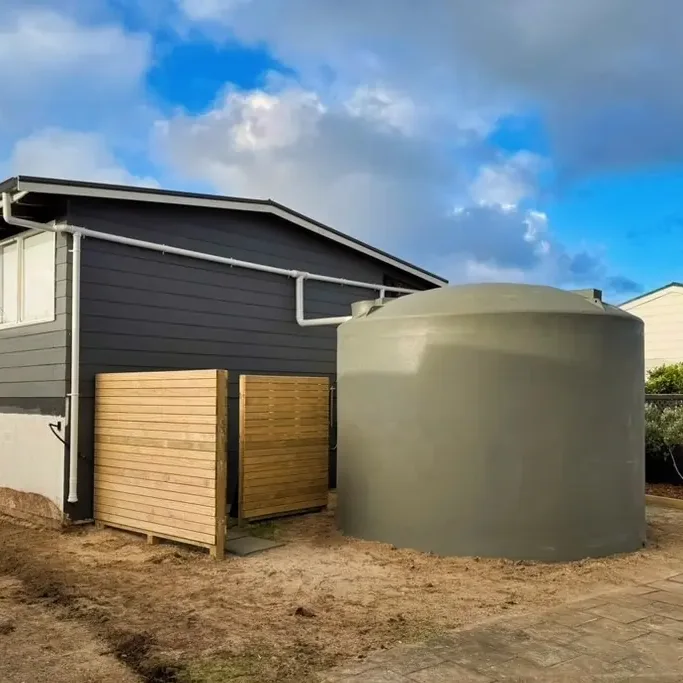
Rainwater harvesting
Gutters, first flush, tanks and treatment working together.
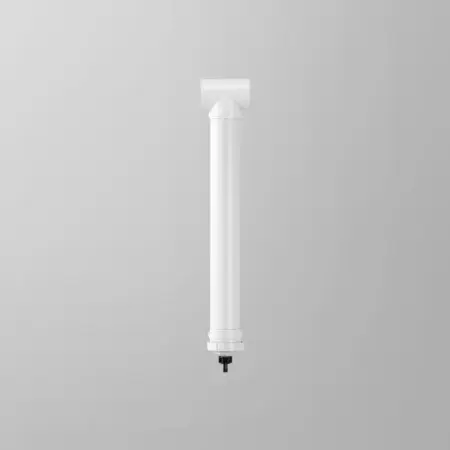
First flush diverter
Keeps the dirtiest roof water out of your tank. In our shop.

Dangerous roof materials
Roofs that shouldn’t feed a drinking water tank.

Water testing
Not sure what’s in your tank? Find out.

Do I need a second tank?
More storage for the dry months, and how to work it out.
Foam in your tank? We’ll sort it.
From Mangawhai to Albany, we’ll organise the tank clean, the water delivery and your new filters, and get your tank water safe again.