

For households relying on rainwater in Matakana, Omaha, Mangawhai, Dairy Flat and across rural Rodney and southern Northland, summer water security starts long before the tank gets low.
El Niño is back in the headlines and this time there is good reason to pay attention.
Earth Sciences New Zealand confirmed in September 2026 that El Niño has strengthened considerably and is expected to influence New Zealand’s weather through spring and into summer. The event is forecast to become very strong, bringing more pronounced westerly weather patterns, wind and temperature variability.
That does not mean every part of northern New Zealand will experience drought.
But if your home relies on rainwater, the more useful question is not:
“Will El Niño cause a drought?”
It is:
“How well would our water supply cope if meaningful rain didn’t arrive for several weeks?”
For properties from Mahurangi through to Mangawhai and Waipu and West through areas such as Helensville, Riverhead, Coatesville and Dairy Flat that is a question worth answering before summer arrives.
Because when rainwater is your main water source, your tank isn’t simply storage.
It is your water supply.
What this article covers at a glance
We remember the drought of 2020
For many rainwater households around our region, 2020 is still a powerful reminder of what can happen when the rain doesn’t come.
At Aqua Works, we remember properties around Mangawhai and elsewhere in our service area going for weeks without meaningful rainfall. We spoke to families whose tanks had run dry while they were still waiting for water to be delivered. For households completely dependent on rainwater, these were extremely difficult and stressful times.
And this wasn’t just our experience.
As the 2020 drought intensified, Auckland Council reported that rainwater tanks were running low or completely dry and waiting times for water deliveries were approaching six weeks or more. Emergency measures were introduced to help water carriers meet demand.
Nobody knows whether summer 2026/27 will produce conditions like 2020.
But 2020 taught us something worth remembering:
The time to build resilience into a rainwater system is while you still have water not after you’ve run out.
How prepared is your home for a dry summer?
A full tank in spring can create a false sense of security.
What matters isn’t simply how much water you have today. It’s how long that water will last, how effectively your property captures the rain that does fall, and whether your entire water system can keep your household supplied through an extended dry period.
A useful starting point is to ask:
➤ How much usable water storage do we actually have?
➤ How many people now rely on that water?
➤ Has our household water use increased since the system was installed?
➤ How much roof area feeds our tanks?
➤ Are we capturing as much of that roof water as practical?
➤ How quickly does our tank level fall during dry weather?
➤ Do we actually know how much water is in the tank, or are we guessing?
➤ Do we regularly need tanker-water top-ups in summer?
➤ Could we increase our storage by adding a second tank?
➤ Is our pump reliable and correctly sized?
➤ If we drink the rainwater, is it appropriately filtered and treated?
If several of those answers are uncertain, now is a good time to find out.
Not when the tank is almost empty.
How much rainwater storage does your home actually need?
There is no single tank size that is right for every property.
The appropriate storage capacity depends on the number of people in the household, water consumption, roof catchment area, local rainfall patterns, garden or livestock use, available space and whether another water source is available.
Current New Zealand Building Performance guidance says that where rainwater is the sole source of water, at least a 30,000-litre rainwater tank is required as a general guideline. It also notes that larger storage is needed in areas with dry summers.
Our own experience with rainwater households takes that thinking further.
As a practical rule of thumb, Aqua Works has traditionally worked on around 50,000 litres of stored water (roughly two large tanks) for an average family of four relying on rainwater through a typical summer.
That’s not a universal sizing rule or a guarantee that 50,000 litres will get every family through every summer. It’s a practical benchmark developed from many years of working with rainwater-dependent households.
More than half of Aqua Works’ customers rely on rainwater, so we’ve seen first-hand just how different one household can be from another.
What does household water use look like in practice?
Another rule of thumb we use at Aqua Works when assessing storage is approximately 200 litres of water per person per day for total household use, including showers, toilets, laundry, cooking, cleaning and everything else that draws from the tank.
For a family of four, that’s around 800 litres per day or 5,600 litres per week.
That figure also aligns reasonably closely with Auckland Council’s experience during the 2020 drought: Council estimated that an average four-person household used more than 43,000 litres over 60 days.
With careful water use, it’s possible to bring consumption closer to 100 litres per person per day. But in our experience, maintaining that level requires conscious and sustained effort from everyone in the household.
This is why tank sizing needs context.
Two families can have exactly the same 30,000-litre tank and completely different levels of water security.
One might have two occupants, extensive roof catchment and modest water use. Another might have four or five people, teenagers taking long showers, frequent summer visitors and gardens drawing from the same supply.
The tank size may be identical. The number of days of water available isn’t.
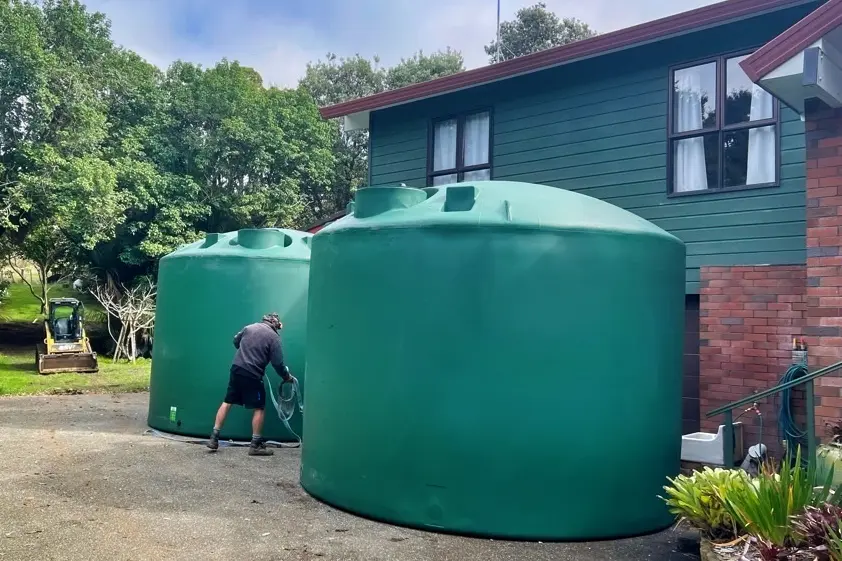
Should I add a second water tank?
For many existing rainwater homes, increasing storage capacity is one of the most direct, easiest ways to improve resilience before summer.
And increasing capacity doesn’t necessarily mean removing your existing tank.
If your current tank is sound, adding a second water tank can allow you to capture and store considerably more rainfall when it is available.
A second tank is particularly worth considering if:
➤ your existing tank regularly gets low over summer
➤ household occupancy has increased
➤ you have frequent guests or a holiday property with high summer demand
➤ additional roof catchment is available
➤ you regularly purchase tanker water
➤ garden, livestock or other uses compete with household consumption
you want a larger reserve for prolonged dry periods.
Auckland Council has previously included investing in extra tank capacity among its recommendations for rural residents preparing for El Niño and dry summer conditions.
But simply placing another tank beside the first isn’t necessarily the whole solution.
The tank position, ground preparation, connections between tanks, roof catchment, overflow, pipework, pump arrangement and treatment system all need to work together.
More storage is most useful when the entire system is designed to make use of it.
Know how much water you actually have
One of the simplest tools for managing tank water is also one of the most useful: a tank level gauge or monitor.
Many people living on rainwater have only a rough idea of how much water is left in their tank. And by the time a tank feels low, the options can be much more limited.
A tank gauge allows you to see your water level and notice how quickly it changes.
That matters because monitoring can influence behaviour. If you can see that the household has used a surprising amount of water in a week without rain, you can respond early, shorten showers, postpone unnecessary outdoor water use, check for leaks or organise a water delivery before demand becomes critical.
A gauge is therefore a very useful water-management tool.
But there’s an important distinction:
Monitoring tells you how much water you have. It doesn’t create more water storage.
For a resilient rainwater system, the two ideas work together: know how much water you have, understand how quickly you’re using it, and make sure you have enough storage in the first place.
More storage means less dependence on emergency water deliveries
Buying tanker water is an important backup for many rainwater-dependent homes around Rodney and Northland.
But there is one obvious problem:
When your property becomes dry, chances are your neighbours’ properties are becoming dry too.
Demand for delivered water can increase rapidly during prolonged dry weather. Auckland Council consequently advises rainwater-dependent households to monitor tank levels and book water deliveries early rather than waiting until they are close to running out.
That makes additional storage valuable in two ways.
It allows you to capture more rainfall when rain is available and it gives you a larger buffer before an emergency delivery becomes necessary.
You can’t control when the next useful rainfall arrives. You can control how much of it you’re able to store.
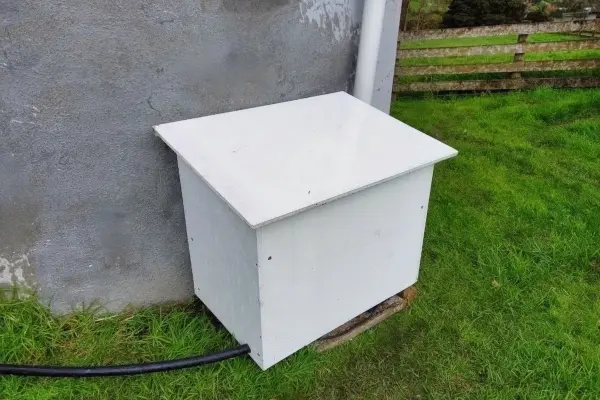
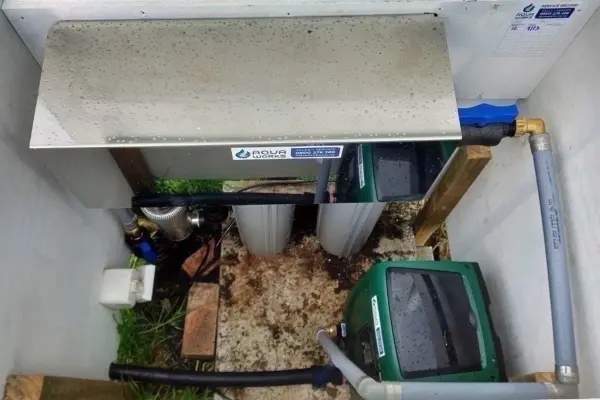
A water tank is only one part of your water supply
This is where rainwater systems are sometimes misunderstood. A dependable household water supply isn’t created by the tank alone.
➤ The roof and gutters collect the water.
➤ The tank stores it.
➤ The pump moves it.
➤ The filtration and treatment system protect its quality.
➤ And the plumbing connects the entire system to your home.
For a rainwater system to work reliably, each of these components needs to do its job. More storage won’t help as much as it should if part of your roof water isn’t reaching the tanks. A full tank isn’t much use if the pump is unreliable. And having plenty of water doesn’t necessarily mean that water is suitable to drink.
New Zealand Building Performance guidance recommends measures including leaf screens, first-flush diversion, secure tank openings and appropriate treatment or purification where rainwater is used for drinking and other household purposes.
The goal isn’t simply more water. It is:
Enough water. At the right pressure. Of the right quality. When your household needs it.
From our years of working with rainwater-dependent households, we often find that improving water security isn’t about changing one thing. It’s about identifying the weakest point in the system.
Here are four areas worth checking when you review your rainwater supply:
Roof & Gutters
Are you capturing as much rainwater as you could be?
Your storage capacity only helps if you can fill it when the rain arrives.
One of the things we look at when assessing a rainwater property is how much roof area is actually connected to the tanks. On some properties, a significant part of the available roof catchment isn’t being used. In others, gutters, downpipes, screens or pipework can restrict how effectively water reaches the tanks.
This becomes particularly important after a long dry spell. When useful rain finally arrives, you want to capture as much of it as practical.
Things worth checking include:
- whether all suitable roof areas are connected to your storage
- gutters and downpipes are clear and in good condition
- leaf screens aren’t restricting water flow
- first-flush systems are working correctly
- pipes between catchment areas and tanks are clear
- tank inlets and overflows are correctly configured.
Before adding more storage, it makes sense to understand how effectively you’re filling the storage you already have.
Water Pump
Don’t forget the pump
Stored water is only useful if you can move it reliably around the property.
Your pump needs to match the required flow, pressure, property layout and household demand.
Low pressure, frequent cycling, noisy operation or inconsistent flow can indicate a pump or pressure-system problem.
And if a new or second tank changes the way water is stored and drawn around the property, the pump configuration should be considered as part of the upgrade.
For rural and lifestyle properties, treating the tank, pump and household plumbing as one system generally produces a much better result than selecting each component independently.
Water Filtration
What about drinking water quality?
Having enough water isn’t the same as having safe drinking water.
Roof-collected rainwater can pick up leaves, dust, bird and animal droppings and other contaminants before it reaches the tank.
Where rainwater supplies drinking and household water, contamination control and appropriate treatment should therefore form part of the system.
Depending on the property and source water, that may include sediment filtration and UV treatment alongside good tank and catchment management.
This is another reason we don’t view a water tank as an isolated product.
Water quantity and water quality ultimately meet at the same tap.
Maintenance
A resilient rainwater system needs regular attention
Rainwater systems can work quietly in the background for years, which makes them easy to forget about – until something stops working or a dry spell puts the system under pressure.
From our experience, small maintenance issues can have a surprisingly large effect on water security. A leaking pipe can slowly empty a tank. Blocked gutters can mean valuable rainfall never reaches it. A pump problem can interrupt supply even when plenty of water is stored, and overdue filters or UV servicing can affect drinking water quality.
Regular checks should include:
- clearing gutters, leaf screens and tank inlet screens
- checking tanks, fittings and pipework for leaks
- making sure first-flush systems and overflows are working
- checking your tank level regularly, ideally with a gauge or monitor
- inspecting pump operation and pressure
- replacing filters according to the recommended service schedule
- servicing UV water treatment and replacing lamps as required
- checking the tank itself and arranging cleaning when necessary.
The best time to discover a problem with your rainwater system is while the tanks are full – not halfway through a dry summer.
Why the best time to prepare is before a drought
Earth Sciences New Zealand’s September outlook says the current El Niño is strengthening considerably and is likely to peak in late spring or early summer.
Auckland Council has also said that El Niño is expected to bring drier-than-normal conditions to Auckland over spring and summer. Auckland’s municipal water storage is currently in a strong position, 94% full in August, but that is a very different issue from an individual rural household relying on the rain falling onto its own roof.
If you’re on tank water, your reservoir is sitting in your backyard. And once prolonged dry weather arrives, demand rises simultaneously for water deliveries, tanks, pumps and installation work.
The best time to prepare for an extended dry spell is before you’re in one.
Rainwater systems are local
Living on tank water is normal across much of the area north of Auckland, but water needs can vary considerably even between neighbouring properties.
A coastal home in Omaha can have very different summer occupancy and water demand from a lifestyle block in Dairy Flat.
A holiday property near Matakana may suddenly have a house full of visitors over Christmas.
A permanent household in Mangawhai may rely on rainwater every day of the year.
Properties around Mahurangi East, Mahurangi West, Snells Beach, Algies Bay, Warkworth, Wellsford, Kaiwaka, Waipu, Coatesville, Riverhead and Helensville each have their own combination of roof catchment, tank storage, household demand and alternative water sources.
That local context matters. Which is why the best question isn’t:
“What size tank should I buy?”
It is:
“What does this property need to make its water supply more resilient?”
One team for your complete water system
At Aqua Works, we’ve been working with water systems across Rodney and surrounding communities since 2000.
More than half of the customers we work with rely on rainwater, so tank water isn’t a niche part of what we do. It’s something our team deals with every day.
And we don’t see a water tank as a standalone product. We look at the journey your water takes, from the moment it lands on the roof or comes from another source until it reaches your tap.
That means we can look at existing storage and catchment, supply and install additional water tanks, prepare tank sites with our own earthmoving equipment, complete the plumbing and connections, install or upgrade pumps, and provide filtration and UV water treatment where required.
For one property, the best improvement may be a second tank.
For another, it may be a larger tank.
Some properties need better use of their existing roof catchment.
Others have sufficient storage but need a pump upgrade, tank gauge or improvements to water treatment.
And occasionally, the existing system is already doing exactly what it should.
The point of looking at the whole system is to find out.
Not sure what your property needs?
We offer a free onsite visit with Steve to look at your existing water storage and system, discuss your options and work out what makes sense for your property. Call Raewyn on 0800 278 296 to schedule an appointment.
There’s no benefit in recommending more equipment than a property needs. Equally, if the current storage is unlikely to provide a comfortable buffer through a prolonged dry period, it’s much better to know that while there’s still time to do something about it.
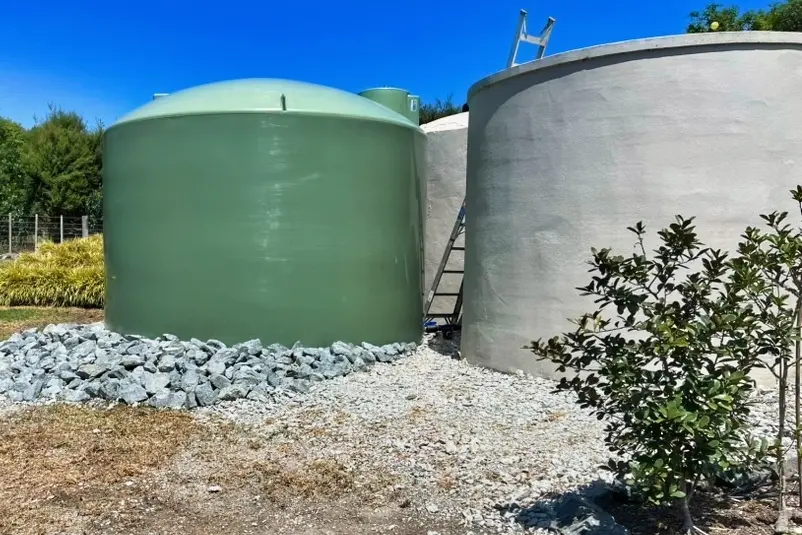
Is your rainwater supply ready for summer 2026/27?
Nobody can tell you exactly how much rain will fall on your roof this summer.
El Niño does not guarantee drought at your property.
But we do know that a very strong El Niño is developing, summer increases pressure on rainwater-dependent households, and you have considerably more options while there is still water in the tank than when it is nearly empty.
So rather than asking:
“Is there going to be a drought?”
Ask:
“If we had several weeks without meaningful rain, would our current water system comfortably get us through?”
If the answer is no or you’re simply not sure, September is a very good time to find out.
Frequently Asked Questions About El Niño / Drought 2026/2027
Does El Niño mean Auckland and Northland will have a drought in summer 2026/27?
No. El Niño influences New Zealand’s weather patterns but does not guarantee drought at an individual location. Earth Sciences New Zealand’s September 2026 outlook does, however, favour below-normal rainfall for the north and east of the North Island during spring, and the current El Niño is expected to become very strong.
How big should a rainwater tank be in New Zealand?
It depends on household water use, roof catchment, rainfall, alternative supplies and what the water is used for. New Zealand Building Performance guidance says properties relying solely on rainwater need at least 30,000 litres of rainwater storage. Properties in dry-summer areas may need substantially more.
How much water does a family of four use each day?
As a practical Aqua Works planning figure, we generally allow around 200 litres per person per day for total household water use. That means approximately 800 litres per day for a family of four. Careful households may be able to reduce this towards 100 litres per person per day, but doing so consistently requires conscious water-saving habits.
How long will 25,000 litres of water last a family of four?
Using a planning figure of 200 litres per person per day, a family of four uses approximately 800 litres daily. 25,000 litres would therefore last approximately 31 days without additional rainfall or other water entering the tank.
Actual consumption varies considerably between households.
Is 50,000 litres enough water storage for a family of four?
From our experience working with rainwater-dependent households, around 50,000 litres, roughly two large tanks, has traditionally been a useful rule of thumb for an average family of four getting through a typical summer. It isn’t a guarantee or a universal sizing standard. Household consumption, roof catchment, rainfall, garden and livestock use and alternative water sources all affect how much storage a particular property needs.
Can I add a second water tank to my existing tank?
In many cases, yes. Adding a second tank can increase total storage without replacing a serviceable existing tank. Tank placement, foundations, connections, overflow, catchment and pump configuration should all be considered as part of the installation.
Is a second tank better than replacing my existing tank with a bigger one?
It depends on the site and existing system. If the current tank is in good condition and there’s suitable space, adding another tank can be an efficient way to increase storage. Other properties may be better suited to one larger tank.
Is a tank level gauge worth having?
Yes. A tank gauge or monitor makes it much easier to see how much water you have and how quickly you’re using it. This can help households change their water use or arrange a tanker delivery earlier during dry weather. A gauge doesn’t increase storage, however, so monitoring and adequate tank capacity should be considered together.
How can I make my tank water last longer in summer?
Know how much water you have, monitor consumption, fix leaks, reduce unnecessary water use and make sure you’re capturing as much suitable roof water as practical. If your tanks regularly run low despite careful use, it may be time to assess whether you need additional storage.
Does rainwater need filtration or UV treatment?
Where rainwater is used for drinking, appropriate contamination controls and water treatment should form part of the system. The right solution depends on the source water and property, but sediment filtration and UV treatment are commonly used as part of rainwater treatment systems.
Can Aqua Works install the tank, pump and water treatment?
Yes. Aqua Works can look at the complete household water system, including tank installation and connections, site preparation, plumbing, pumps, filtration and UV water treatment. If you’re unsure what your property needs, we also offer a free onsite visit with Steve to discuss your options.
Call Raewyn on 0800 278 296 to schedule an appointment.