Water Testing
Tank, bore and stream water, for homes and businesses.
Tested at an accredited lab.
- Since 2000
- 400+ five-star Google reviews
- Licensed Master Plumbers
- E. coli-free guarantee
- Mangawhai to Albany
Why test your water?
You can’t see, smell or taste most of what makes water unsafe. E. coli, nitrate, arsenic and lead don’t change how water looks. A lab test is the only way to know what’s in it. Every sample goes to Hill Laboratories, an IANZ-accredited lab, and our routine test always includes silica.
Which test do you need?
It depends on your water and why you’re testing.
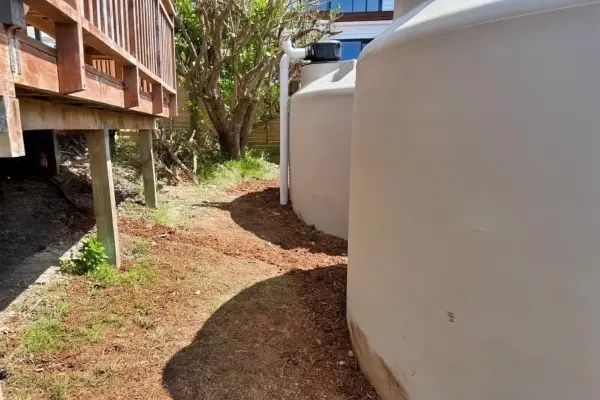 RainwaterA bacteria test after a new system, a flood or a scare. A full routine test if the water tastes, smells or looks wrong.
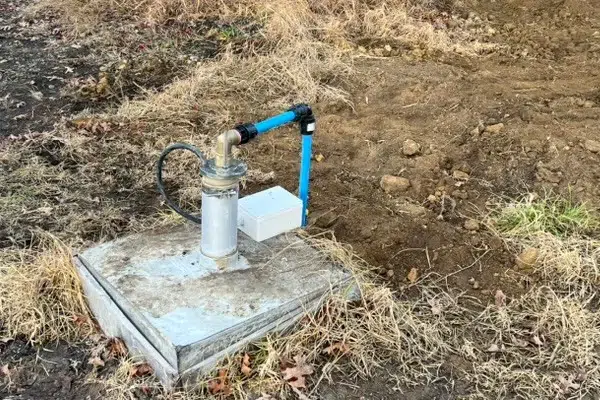 Bore waterA full routine test with silica and E. coli before we design anything, then the chemistry every two years.
 Stream, dam or springA routine test plus E. coli, turbidity and UV transmittance, with colour and tannins if the water is stained.


Is my water safe to drink?
It depends where your water comes from.
Town water. If you’re on a council or Watercare supply, “your water safety is monitored by your local authority”, says the government’s HealthEd leaflet on household water (HE10148, January 2022). Suppliers have to meet the Drinking Water Standards, and they tell you if you need to boil your water. In older homes, old pipes and brass fittings can add lead to water that has sat in them: see lead in water.
Tank, bore, stream or spring water. Here, “it is up to you to keep your water safe”, the same leaflet says. You can’t tell by looking, smelling or tasting it, so the only way to know is a lab test. For bugs, safe means the test finds no E. coli: less than 1 in 100 mL, the limit in the Drinking Water Standards.
Think your water isn’t safe? Do this now
- Boil water for drinking, brushing teeth and cooking: one minute at a rolling boil. A full jug that switches itself off is fine. Never hold the switch down.
- If anyone is unwell, call your doctor, or Healthline free on 0800 611 116.
- On town water, check your council’s or Watercare’s website for a boil water notice.
- On tank water, look for a dead animal, droppings or a gap in the lid, and check the UV is on and not alarming.
- Get the water tested. Pick up a sterile bottle from our Warkworth shop, or we’ll take the sample for you.
What our tests cover
We never recommend treatment without a test. It has to match your water, or it won’t work.
We go through the results with you and give you written recommendations if anything needs fixing or changing.
Tests for homes
Tank, bore and stream water, tested at an accredited lab.
Tests for businesses
The testing the drinking water rules ask for, built into your service plan.
How often should you test?
For a home on its own supply, testing is guidance rather than a rule. The household water supplies guide suggests checking for bugs every three months and the chemistry every year.
In practice, once your water is treated and the system is serviced every year, rainwater doesn’t need routine testing, and we suggest a full chemical test of bore water every two years. Businesses have set rules to follow.
Times to test your water
- Before you buy or rent a home.
- After a new treatment system goes in.
- After a flood or very heavy rain.
- If the taste, colour or smell changes.
- If someone in the house gets sick.
- If an animal gets into the tank.
- If someone is pregnant or there’s a baby.
- When you add or change a water source.
- Before a café or food business opens.
How water testing works
Four simple steps.
- 1Tell us about your waterCall us and we’ll work out which test suits your water and why you’re testing.
- 2Take the sampleWe take it on site, or you collect a sterile bottle from our Warkworth shop.
- 3Lab testingHill Laboratories, an IANZ-accredited lab, tests your sample.
- 4Results explainedWe go through the results with you and give you written recommendations.
The right test, an accredited lab, and results explained. Book a water test
Taking your own sample
Pick up a sterile sample bottle from our shop at 2 Mill Lane, Warkworth. We’ll give you instructions, and the main do’s and don’ts are:
- Use a cold tap inside the house, with any hose, filter or aerator taken off, and wipe the outlet clean.
- Wash your hands, then run the tap for two minutes.
- Don’t touch the inside of the bottle or the cap.
- Fill it to the shoulder, cap it straight away and keep it in the fridge.
Getting it to the lab in time
Bacteria samples have to reach the lab chilled and within 24 hours, and the lab is in Hamilton. So bring your sample back to our shop before 4pm, Monday to Thursday, on the day you take it. We don’t send samples on a Friday, because they would sit over the weekend.
Taking the sample yourself saves a visit. If you’d rather we did it, we take samples on site, often at your yearly service.
Testing for businesses
Businesses on their own water supply have more to do. Under the Acceptable Solutions, bore, spring and stream water is tested every three months for E. coli, total coliforms, turbidity and UV transmittance, with the chemistry every year. Roof water is tested every three months for E. coli and total coliforms, and for cadmium, copper and lead every three years. Buildings like cafés, workshops and schools also test the treated water at the tap every three months, or every month above 100 people a day.
Food businesses must test their water before they first use it, and again within a week of a new source or a flood. We build testing into your service plan: we take the samples at our visits, send them to the lab and keep the records. We do this for Matakana Workshops, with 51 units, and Matakana Estate, among others.
Water reports for selling or renting
No law asks for a “potable water certificate”, but buyers, tenants and property managers often want proof the water is safe. We can test the water and write you a short water report: what we tested, how the results compare with the Drinking Water Standards, the treatment installed and when it was last serviced.
A test shows the water was safe on the day it was taken. Keeping it safe comes down to treatment that’s serviced every year, which is what our Aqua Guarantee covers for rainwater and bore water with the right pre-treatment. Ask us about a water report.
Don’t just take our word for it…

⭐⭐⭐⭐⭐
“Great service, on time for appointment, quick and efficient water filter replacement and water testing. Very happy with the service provided. Cheers”
Trevor Isted, 2021
⭐⭐⭐⭐⭐
“Steve and his team are the best. We’ve used them to filter water and resolve problems for four of our houses, with zero complaints! They are knowledgeable, speedy and so kind! Would recommend. Will use again!”
Jenna Binnie, 2026
⭐⭐⭐⭐⭐
“Great team, Aqua Works have been servicing and replacing our filters since we built 10 years ago. Friendly, helpful, cost effective and they know their stuff.”
Joanna Clough, 2025

Our E. coli-free guarantee
At Aqua Works, we guarantee E. coli*-free drinking water that meets New Zealand drinking water standards and all legal requirements.
Applies to rainwater and bore water with the right pre-treatment, when Aqua Works installs or services your UV system and keeps servicing it at the agreed intervals (usually every 12 months). It doesn’t cover surface water from streams, rivers, dams or lakes. We can’t take responsibility if your raw water quality changes. Recommended testing: rainwater, none needed; bore water, a full routine chemical test every two years; commercial supplies, E. coli every 3 months plus a full routine chemical test every 12 months.
*E. coli-free means no active E. coli and water that passes NZ drinking water standards.
Water testing FAQs
How do I know if my water is safe to drink?
It depends on your supply. Town water is monitored by your council or water supplier, and they tell you if you need to boil it. Tank, bore and stream water is up to you, and you can’t tell by looking, smelling or tasting it. A lab test is the only way to know. For bugs, safe means less than 1 E. coli in 100 mL, the limit in the Drinking Water Standards.
Is my tap water safe to drink?
If you’re on town water, it has to meet the Drinking Water Standards and your supplier monitors it. If there’s a problem, they put out a boil water notice. If your tap water comes from a tank, bore or stream, nobody checks it but you, so have it tested. In older homes, old pipes and brass fittings can also add lead.
What should I do if I think my water is unsafe?
Boil water for drinking, brushing teeth and cooking: one minute at a rolling boil. If anyone is unwell, call your doctor, or Healthline on 0800 611 116. Then get the water tested. On tank water, check the tank, the filters and the UV, or call us and we’ll check them and take a sample at the same visit.
How much does a water test cost?
It depends on which test you need. Call us on 0800 278 296 and we’ll tell you which test suits your water and what it costs.
How long do the results take?
Bacteria results usually take two working days, and a routine water test five to ten working days. We go through the results with you and give you written recommendations if anything needs fixing or changing.
Can I take the water sample myself?
Yes. Pick up a sterile bottle from our shop at 2 Mill Lane, Warkworth, follow our instructions, and bring it back before 4pm, Monday to Thursday, on the day you take it.
Why can’t I drop a sample off on a Friday?
Bacteria samples have to reach the lab in Hamilton chilled and within 24 hours. A Friday sample would sit over the weekend, so the result wouldn’t be reliable.
How often should I test my tank water?
The household water supplies guide suggests bugs every three months and the chemistry every year. Once your water is treated and the UV is serviced every year, rainwater doesn’t need routine testing. Test after a flood, a new system, or if anything changes.
How often should I test my bore water?
Test it before any treatment is designed. Once treatment is in and serviced every year, we suggest a full chemical test every two years, and sooner if the colour, taste or smell changes.
What testing does a business need?
It depends on the supply. Businesses on an Acceptable Solution test bore, spring and stream water every three months for bacteria, turbidity and UV transmittance, the chemistry every year, and roof water metals every three years. Buildings like cafés also test the treated water at the tap. We set up a testing plan for you.
Do food businesses have to test their water every year?
MPI’s template food control plan asks for a test before you first use the water, and again within a week of a new source or a flood. Many businesses test at every service anyway, so the records are always up to date. If you supply drinking water to the public, the drinking water rules may apply too.
Do I need a potable water certificate to sell my house?
No law requires one, but a house that’s let must have potable water, and buyers often ask. We can test the water and give you a written water report.
What’s in your routine water test?
A full chemical, mineral and metals test, including pH, hardness, iron, manganese, nitrate, arsenic, boron, lead and copper, plus silica, which we always add.
Need your water tested?
Call us and we’ll tell you which test you need, or pick up a sample bottle from our Warkworth shop.
Book a water testor call 0800 278 296