
Tannins in Water: Tea-Coloured Water
Yellow or brown water from bores, springs and tanks.
Book a FREE onsite visit.
What are tannins (organics)?
Tannins are natural organic matter from rotting leaves, plants and peat. Water that soaks through bush, swamp or peaty ground picks them up and turns yellow, or brown like weak tea. The household water supplies guide gives the source of colour in water as “decaying vegetation and leaf litter”. In Northland, pine needles and tannins stain some dune lakes brown.
In the water industry they’re often just called organics, and on a lab report they show up as colour and organic carbon. Strictly, “organics” covers more than tannins, but the yellow-brown colour comes almost entirely from the same thing: humic and fulvic acids from rotting plants.
Tannins are most likely in:
- Shallow bores and springs, especially near swamp, bush or peat.
- Streams, dams and ponds, which often run darker after heavy rain.
- Rainwater tanks, where leaves steep in the gutters or rot in the sludge on the tank floor. Rainwater can be a big tannin problem.
The colour is dissolved in the water, so it doesn’t settle out and a sediment filter won’t catch it. That’s also how you tell it apart from iron and sediment: see below.
We test and treat stained water on bores, springs, streams and tanks across Rodney and North Auckland, from Mangawhai to Albany.
Start with a free onsite visit.
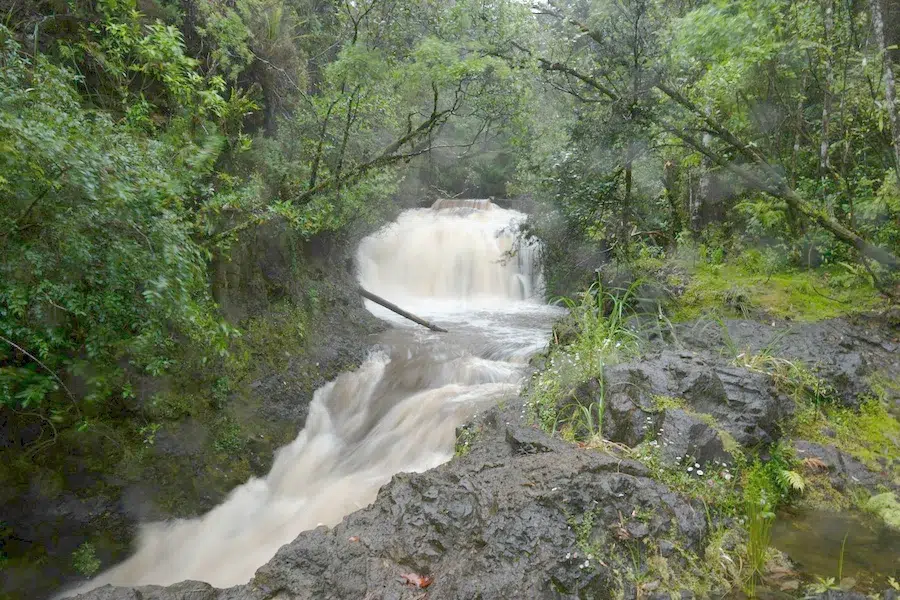
What tannins do
Tannins aren’t a direct health risk, and there’s no health limit for colour in New Zealand. But they cause real problems.
They can stop your UV working
Tannins absorb UV light, so they shade bugs from your UV system. Taumata Arowai warns that tannins can stop UV disinfection from working and let harmful bugs into your drinking water. UV makers set tight limits: Viqua’s home units want tannins under 0.1 mg/L and at least 75% UV transmittance (UVT).
They stain and taste
Taumata Arowai’s aesthetic value for colour is 15 colour units, set for appearance, not health. At that level most people can see the colour in a glass of water. Stained water looks unappealing, can taste earthy or bitter, and can mark basins, baths and toilets.
They react with chlorine
Chlorine reacts with natural organic matter to form by-products called trihalomethanes. Health Canada notes that removing colour before chlorinating cuts them down. That’s worth knowing before you shock dose stained water.
They can be a warning sign on bores
A deep, well-sealed bore is rarely stained. Coloured bore or spring water can mean surface water is getting in, so we test for E. coli as well.
Signs of tannins
Yellow or tea-coloured water straight from the tap.
Colour that doesn’t settle out overnight.
Colour that stays after your filters.
Water that gets darker after heavy rain.
A yellow tinge in a full bath.
An earthy or bitter taste.
Yellow-brown marks on basins and toilets.
Gum, kānuka or mānuka trees over the roof.
A bore or spring near swamp, bush or peat.
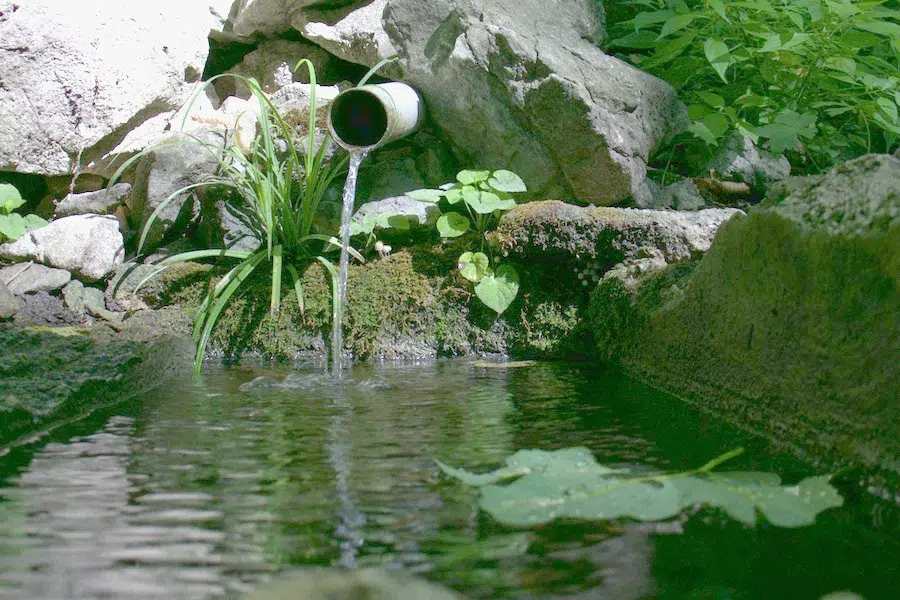
Springs and shallow bores near bush, swamp or peat are the most likely to pick up tannins.
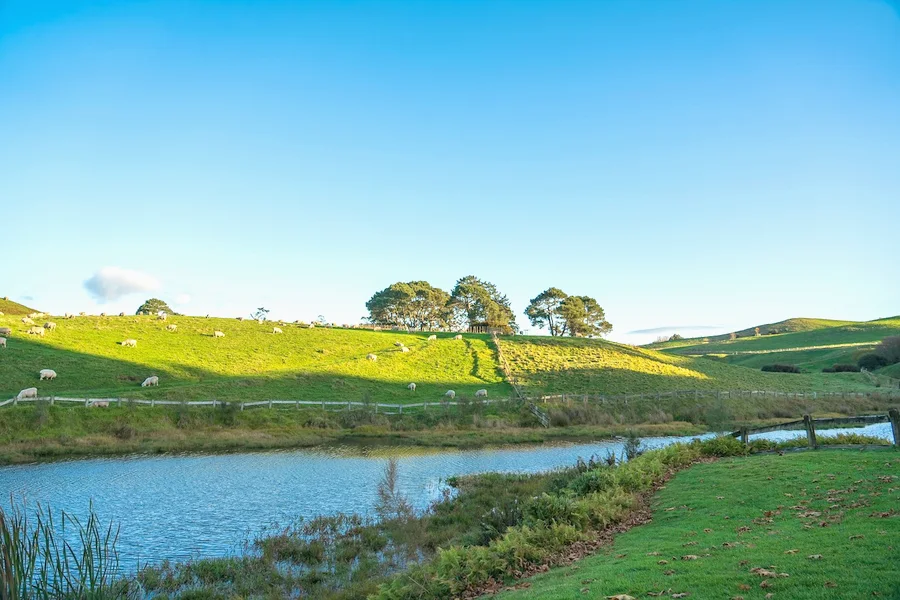
Dams, ponds and streams can change colour quickly after rain. See surface water treatment.
What treatment does
- Takes out the yellow or brown colour.
- Lets your UV system do its job.
- Improves the taste.
- Stops new stains on basins and toilets.
What a sediment filter doesn’t do
- Remove tannins. They’re dissolved, so they pass straight through.
- Kill bugs. That’s the UV system’s job.
- Take out dissolved iron. That needs its own treatment.
- Fix a stained tank. Clean the tank and gutters first.
Clear water first, then safe water.
Tannins, iron or sediment?
They can look alike in a glass, but each one needs a different fix.
Tannins: yellow or tea-coloured straight from the tap. The colour is dissolved, so it doesn’t settle out and filters don’t catch it.
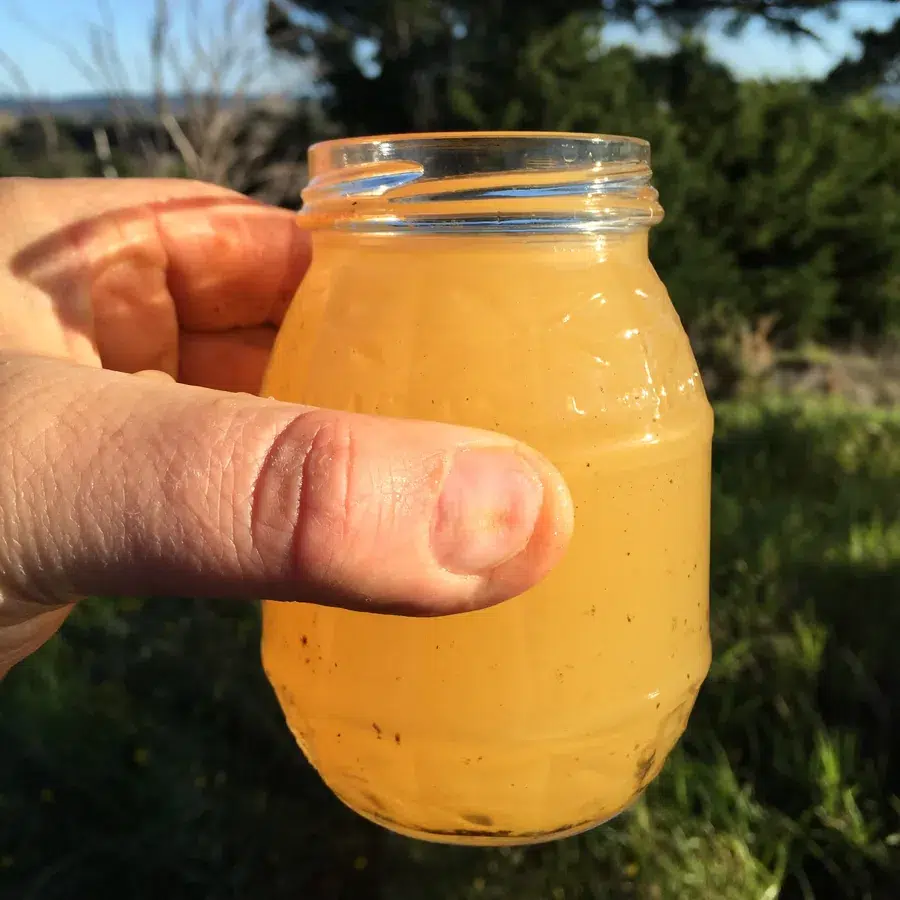
Iron: often clear from the tap, then turns orange-brown as it meets air and settles. See iron and manganese.
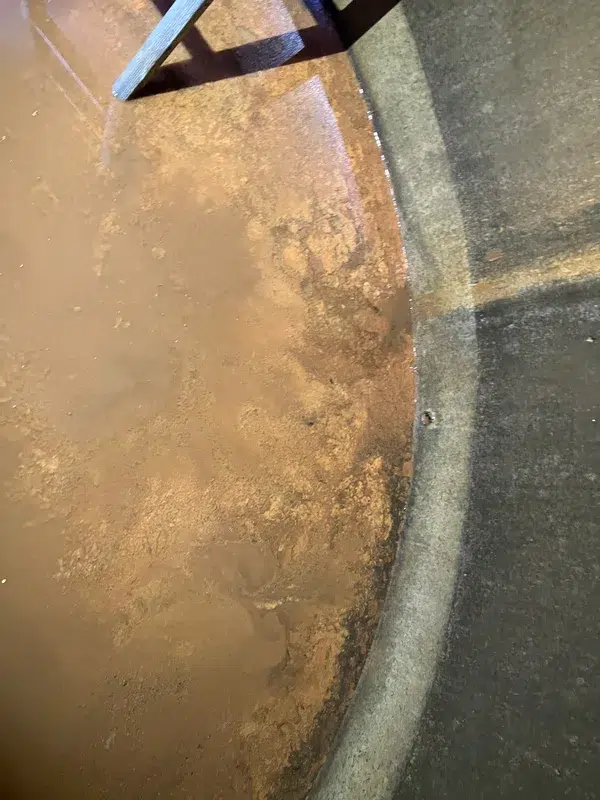
Sediment: cloudy or muddy as soon as it comes out, and it settles in a glass. See sediment filters.
How we treat tannins
There isn’t one tannin filter that suits every supply. What works depends on how much colour there is, what’s causing it, and what else is in the water, such as iron, manganese and hardness. So we test first, and sometimes we run a trial before we design the system.
Ozone breaks down a lot of tannin and colour, and on some water it works brilliantly. Where it needs help, we add carbon. Both go in ahead of the sediment filters and UV, so the UV can do its job. For drinking water, we can also fit reverse osmosis at the kitchen tap.
Ways to remove tannins
Each option has its place. Often the answer is a combination.
Ozone
Ozone is a strong oxidiser that breaks down colour, along with iron, manganese and the rotten egg smell. It leaves the organic matter in the water in a form bugs can feed on, and it doesn’t stay in the water, so filters and UV still go after it. See ozone tank treatment.
Activated carbon
Carbon soaks up colour, taste and smell. It works well on light staining but gets used up fast on heavily stained water, and bugs can grow on it, so a UV system must go after it.
Tannin-removal resin
A special resin in a tank, like a water softener, swaps the tannins for chloride and is cleaned with salt. It has to suit your water, and iron and hardness are usually dealt with first. An ordinary softener doesn’t remove tannins.
Reverse osmosis
An under-bench reverse osmosis system removes colour at the drinking tap. It’s for drinking and cooking water, not the whole house.
Fix the source first
Rainwater tanks. Rainwater can be a big tannin problem. Leaves collect in the gutters, and where a gutter doesn’t fall properly the water sits in it and the leaves steep like a teabag. In our experience the worst trees are gums and our natives, especially kānuka and mānuka. They can turn tank water tea-coloured very quickly, and their leaves are so small they’re hard to keep out of the tank.
For those we fit a Maelstrom filter on the tank, which catches leaves and fine debris down to 180 microns before the water goes in. The household water supplies guide also recommends gutter guards or mesh, a first flush diverter, cutting back overhanging trees, and cleaning the tank whenever the water turns coloured or cloudy. We use Cross Country Tank Cleaning and Mobi Kair. See rainwater harvesting.
Bores and springs. Stained water from a bore or spring can mean surface water is getting in, which can bring bugs with it. We check the bore head and the seal, and test for E. coli as well as colour.
Streams and dams. The colour changes with the weather, so we design for the worst water you get, usually after heavy rain. See surface water treatment.
Test your water
A lab test tells us what we’re dealing with. For stained water we ask the lab for true colour, UV transmittance, organic carbon, and tannins and lignins, along with iron, manganese, hardness and pH. Those results tell us whether ozone, carbon or resin will work, and whether your UV will cope.
Colour is often worst after heavy rain, so that’s a good time to take a sample. See water testing.
How we fix tea-coloured water
Every job follows the same four steps.
1
Free onsite visit
We look at your water source, tanks or bore, filters and UV.
2
Test the water
We send a sample to the lab for colour, UVT, organics, iron and more, and run a trial if needed.
3
Install
Our registered plumbers fit the treatment, filters and UV to suit your water.
4
Service
We service the system every year, check the water is still clear, and remind you when it’s due.
Tannins and the rest of your system
Tap a card to find out more.

Surface water
Stream, dam and spring water, where tannins are most common.

Bore water
We test bore water and design the treatment to suit.

Rainwater tanks
Filters and UV that make tank water safe to drink.
Iron and manganese
Orange or black water and stains. Often found with tannins.

Ozone tank treatment
Breaks down colour, iron, manganese and smells in the tank.

Water testing
Lab tests for colour, UVT, organics, iron and more, explained.
Professional installation
Our own registered plumbers install water treatment across Rodney and North Auckland, from Mangawhai to Albany.
- Designed to a lab test of your water.
- Sized for how much water you use.
- Fitted ahead of your sediment filters and UV.
- Tested again after it goes in.
Ongoing service and support
We service your treatment, filters and UV at the same visit, and remind you when it’s due. We service most makes and models: see water filter and softener servicing.
Tannin FAQs
What are tannins in water?
Natural organic matter from rotting leaves, plants and peat. Water that soaks through bush, swamp or peaty ground picks them up and turns yellow or tea-coloured.
Are tannins harmful?
Not directly, and there’s no health limit for colour in New Zealand. But tannins can stop a UV system from working properly, and stained bore or spring water can be a sign that surface water, and bugs, are getting in. So it’s worth testing.
Why is my bore water yellow or brown?
If it’s coloured straight from the tap and doesn’t settle, it’s usually tannins. If it comes out clear and turns orange-brown as it sits, it’s iron. Tannins and iron are often found together, so a lab test is the only way to know for sure.
Why is my tank water tea-coloured?
Usually leaves steeping in the gutters or rotting in the tank. Where a gutter doesn’t fall properly, water sits in it and the leaves steep like a teabag. Gum trees, kānuka and mānuka are among the worst. Fix the gutter fall, fit gutter guards and a first flush diverter, cut back overhanging trees and clean the tank. For small leaves like kānuka and mānuka, we fit a Maelstrom filter on the tank.
Are tannins the same as organics?
Mostly, yes. “Organics” is the trade word for natural organic matter in water. It covers more than tannins, but the yellow-brown colour comes almost entirely from humic and fulvic acids from rotting plants, which is what people mean by tannins. A lab measures it as colour and organic carbon.
Will my UV system work with tannins?
Not reliably. Tannins absorb UV light and shade bugs from it. Viqua’s home UV systems want tannins under 0.1 mg/L and at least 75% UV transmittance, so stained water needs treating before the UV.
Does a sediment filter remove tannins?
No. Tannins are dissolved in the water, so they pass straight through a sediment filter. You need ozone, carbon, a tannin-removal resin or reverse osmosis, depending on your water.
Does a water softener remove tannins?
An ordinary softener doesn’t. A tannin-removal resin does.
Can ozone remove tannins?
Often, yes. Ozone breaks down a lot of tannin and colour, and on some water it works brilliantly. It depends on what’s causing the colour, so we test first and sometimes run a trial. Filters and UV still go after it. See ozone tank treatment.
How do you test for tannins?
We send a sample to the lab and ask for true colour, UV transmittance, organic carbon, and tannins and lignins, along with iron, manganese, hardness and pH. Colour is often worst after rain, so that’s a good time to sample.
What is the limit for colour in drinking water?
Taumata Arowai’s aesthetic value for colour is 15 colour units. It’s set for appearance, not health: at that level most people can see the colour in a glass.
Should I shock dose stained water with chlorine?
Talk to us first. Chlorine reacts with natural organic matter to form by-products called trihalomethanes, so it’s better to remove the colour before chlorinating.
Don’t just take our word for it…

⭐⭐⭐⭐⭐
“We have an advanced rain water treatment system at our Mangawhai Heads home which includes whole house neutralisation, UV treatment and 3-stage filtration with KDF/GAC, primarily for removal of copper contamination from gutters and down pipes. The system was supplied and installed by Aqua Works and has just had its first annual service by them. We have been totally satisfied with the expert service throughout …”
Richard Mules, 2025
⭐⭐⭐⭐⭐
“Super team and we are looked after like family. Always a good job, always get a reminder and I never have to worry about the clarity and safety of our water. Thank you.”
Erica Kelly, 2026
⭐⭐⭐⭐⭐
“Great team, prompt, efficient and such a great product. With the water supply in our area, the aqua filter makes a huge difference.”
Amanda Wynne, 2021
Tea-coloured water?
Book a FREE onsite visit. We’ll test your water and tell you what will clear it.