
Your rainwater tank may have worked well for years, until your household grew, summers became harder to manage, or you found yourself ordering tanker water more often than you’d like.
Adding a second water tank can be a practical way to increase your water reserves without replacing a perfectly good existing tank. But more storage isn’t always the right answer. Sometimes replacing an ageing tank makes better sense. Sometimes the problem isn’t storage at all, but how effectively your property collects and uses rainwater.
So how do you know what your home actually needs?
In this guide, we’ll help you work out whether a second tank is worth investing in, how much extra storage could make a difference, and what to consider before choosing between adding another tank and replacing your existing one.
What this article covers at a glance
When is adding a second water tank worth it?
The signs that you may need more storage.
How much extra water storage would make a difference?
Practical calculations and our water storage calculator.
Second water tank or larger replacement, which is better?
Compare your options and see real installation examples.
What should you know before ordering another tank?
Site access, groundwork, plumbing, pumps and consent.
What affects the cost of adding a second water tank?
The factors behind installation costs.
Which water tank solution is right for your property?
How Aqua Works can help you make the right decision.
When is adding a second water tank worth it?
Adding a second water tank is often worthwhile when your existing tank is in good condition and collects rainwater effectively, but doesn’t provide enough storage to meet your household’s needs during longer dry periods.
However, running low on water doesn’t automatically mean you need another tank. Understanding why your water supply is struggling is the first step.
Here’s what to look for:
More storage could be the answer
-
Your tank regularly runs low during summer.
-
It overflows during wetter months.
-
You often order tanker water.
-
Your household’s water needs have increased.
A second tank could help you store more water between rainfall events.
Check your existing system first
- Your tank rarely fills, even after good rainfall.
- Your water level drops unexpectedly.
Roof catchment, pipework, leaks or consumption may need attention before investing in more storage.
Tank replacement makes more sense
- Your existing tank is damaged or deteriorating.
- Its position or configuration no longer suits your property.
Replacing the existing tank with a larger one may be a better long-term investment.
The distinction is important. If you’re collecting enough rainwater but can’t store enough of it to get through the drier months, increasing your storage capacity could be the right investment.
If you’re not collecting enough water in the first place, adding another tank alone won’t solve the problem.
So, assuming more storage is the answer, how much difference would another 10,000, 15,000 or 25,000 litres actually make?
How much extra water storage would make a difference?
For a family of four, adding another 25,000-litre water tank could provide approximately 31 extra days of household water, even if no further rain falls.
To put that into perspective, at Aqua Works we commonly use around 200 litres per person per day as a practical planning figure for household water consumption.
For a family of four, that’s approximately 800 litres a day, or 5,600 litres a week.
What could another tank give you?
10,000 L tank
12.5
extra days
15,000 L tank
19
extra days
25,000 L tank
31
extra days
What does that mean for your existing tank?
Let’s say your home currently has one 25,000-litre water tank.
At the consumption rate above, a full tank could provide around 31 days of water without rain.
Add another 25,000-litre tank, and your total storage increases to 50,000 litres. Potentially, it will give your household around 62 days of water instead of 31.
That’s roughly another month of water in reserve.
Of course, how long your water actually lasts depends on household consumption, visitors, outdoor use and how much rain you collect. And additional storage only provides that extra reserve when there’s enough water available to fill it.
The aim isn’t simply to have bigger tanks. It’s to have enough usable storage to comfortably support your household between rainfall events.
How long could your tank water last?
See how much difference extra rainwater storage could make for your household.
That's approximately 31 extra days of water.
Illustrative estimate only. Assumes tanks start full, there is no further rainfall or water delivery, and daily use stays constant. Actual usable tank volume, garden or livestock use, leaks and water demand will affect the result. This is not a complete tank-sizing assessment.
Second water tank or larger replacement. Which is better?
If your existing water tank is in good condition, adding a second tank is often a practical way to increase storage. If it’s ageing, damaged or poorly positioned, replacing it with a larger tank may be the better long-term investment.
The right choice depends on your current tank, available space, site access and how the additional storage will work with your existing water system.
Option 1: Add a second water tank to your existing system
Keeping your existing tank makes sense when it’s structurally sound and still doing its job, but your household needs a larger water reserve.
Adding a second tank can allow you to:
- Increase storage without removing a perfectly good tank.
- Make use of available space elsewhere on your property.
- Capture more rainfall when your existing tank would otherwise overflow.
- Expand your water system while retaining much of your existing infrastructure.
The important consideration is how the tanks will work together. The connecting pipework, water levels and pump arrangement need to be assessed so you can effectively use the additional storage.

Option 2: Replace your existing tank with a larger one
Sometimes keeping the old tank isn’t the smartest investment.
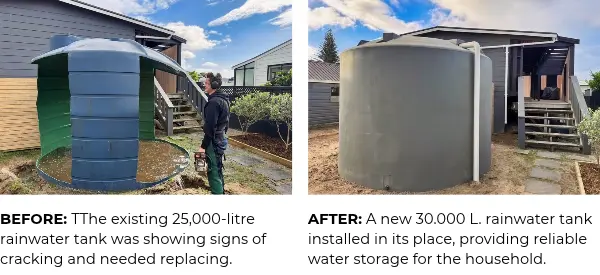
If it’s deteriorating, leaking, difficult to maintain or poorly located, replacing it can be an opportunity to improve the entire setup.
A larger replacement tank may be preferable when:
- Your existing tank is nearing the end of its useful life.
- There isn’t enough suitable space for a second tank.
- The current location or plumbing arrangement is problematic.
- You’re already planning significant changes to your rainwater system.
Replacement can involve additional work, including managing the existing water supply, removing the old tank and preparing the site for the new one.
Not sure which option is right for your home?
Adding a second tank or replacing your existing one? The best choice depends on your property’s needs, available space and existing water system.
Let Aqua Works help you find the right solution.
What should you know before ordering a second water tank?
Before choosing a tank, it’s worth checking a few practical details. The right location, access and connections can make a significant difference to how straightforward and cost-effective your installation will be.
1. Where can the new tank go?
You’ll need enough space for the tank, a suitable base and access for future maintenance. Ground conditions, slopes and the distance from your existing water system all need to be considered.
2. Can the tank be delivered and positioned?
Narrow driveways, steep sections, buildings and established gardens can make tank placement challenging. Some sites require excavation, additional machinery or specialist lifting equipment.
It’s worth assessing access before ordering a tank, rather than discovering it won’t fit when it arrives.
3. Will your existing pump and plumbing work with another tank?
Often, yes. But the connecting pipework, tank levels, suction arrangement and overflow need to be considered so the additional water can be used effectively.
A second tank doesn’t automatically mean you need a new pump.
4. Will you have water during the installation?
If you’re connecting a new tank or replacing an existing one, the work may temporarily interrupt your household water supply.
Planning ahead can help minimise disruption. Depending on the project, this may involve transferring stored water, arranging a temporary supply or coordinating a water delivery.
5. Do you need consent for another water tank?
Some water tank installations in New Zealand qualify for building consent exemptions. However, requirements depend on the tank, its location, supporting structure and associated work. Local planning rules may also apply.
It’s best to check the requirements for your particular property before installation.
Getting these details right from the beginning helps avoid unnecessary costs, delays and complications later on.
What affects the cost of adding a second water tank?
The cost of installing a water tank depends on more than the tank itself. Site access, ground preparation, plumbing and any changes to your existing water system can make a significant difference to the final price.
To give you a better idea of what’s involved, here are two real Aqua Works projects.
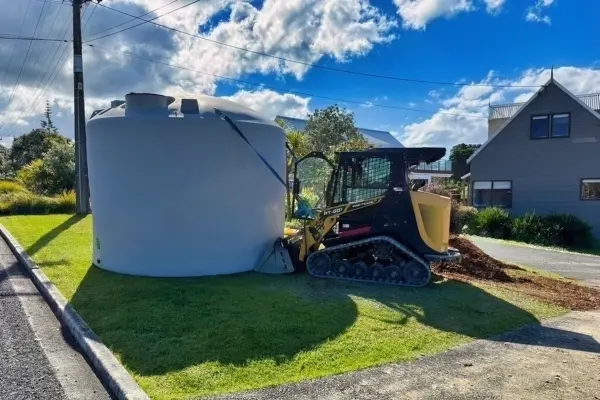
Straightforward Second Tank Installation (Warkworth, September 2026)
25,000-litre Devan tank
Total Costs: NZ$8,000 incl. GST
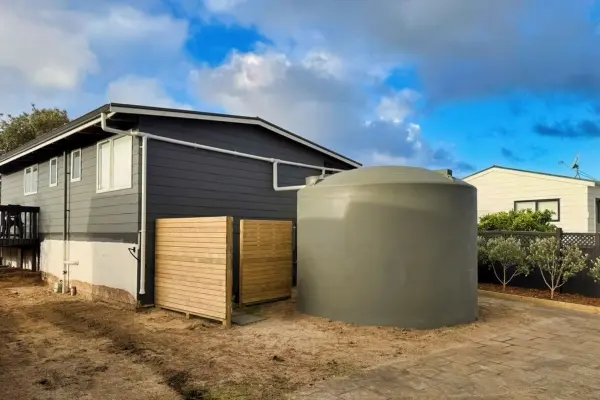
This Warkworth property already had a working rainwater system.
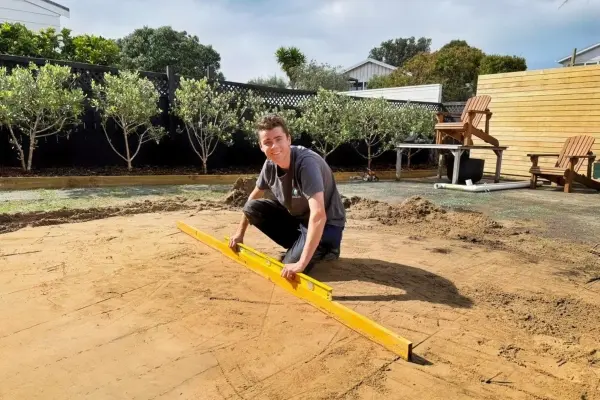
We installed an additional 25,000-litre tank alongside the existing one, with minimal earthworks and a short pipe connection.
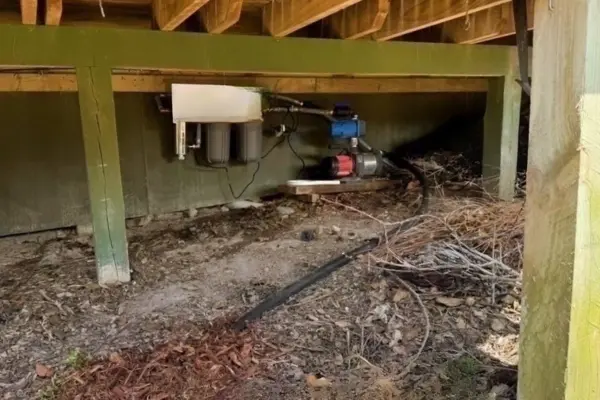
The existing pump could be retained, keeping the installation relatively straightforward.
Time onsite: One day with two Aqua Works team members.
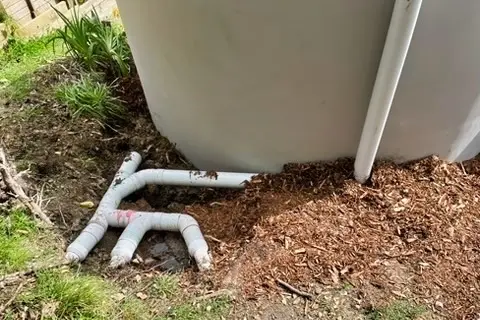
Complete Water Tank Replacement & System Upgrade (Leigh, October 2026)
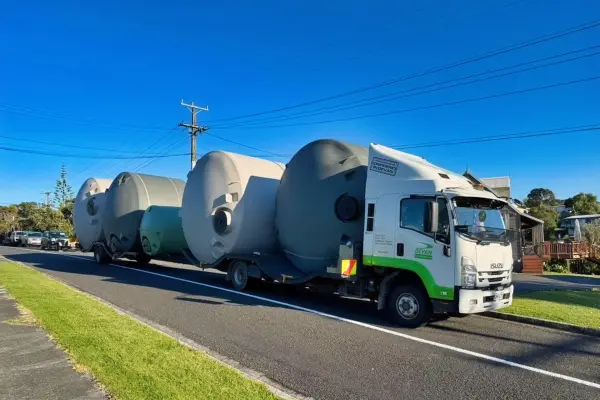
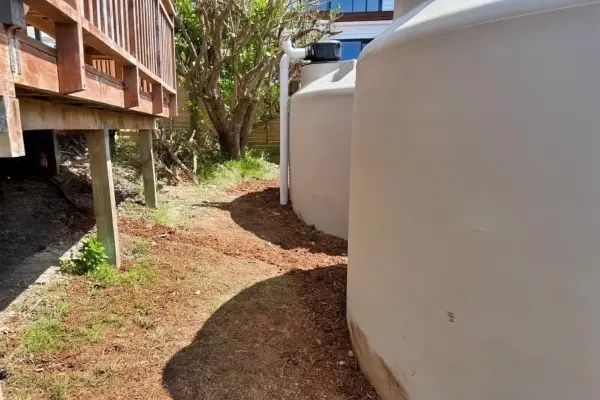
Two 30,000-litre Devan tanks
Total Costs: NZ$21,850 incl. GST
This Leigh project involved considerably more than adding extra storage.
The existing concrete tank had to be removed, and difficult site conditions required clearing, excavation and trenching through rough terrain.
We installed two new 30,000-litre tanks, approximately 30 metres of pipework, a new pump and UV water treatment system, with mulch backfill around the tanks.
Time onsite: Two days with three Aqua Works team members.



Why the difference?
These projects show why the purchase price of a tank tells only part of the story.
The right approach depends on what your property already has, what needs changing and how much additional storage you want to achieve.
That’s why Aqua Works offers a free onsite assessment before recommending a solution or preparing an installation quote.
Project prices reflect the work completed at the time and are provided as examples only. Actual costs depend on your property’s requirements.
Not sure which water tank solution is right for your property?
Every property is different. The right solution depends on your existing tank, household water needs, available space and how effectively your current rainwater system works.
That’s why we prefer to take a look before recommending another tank.
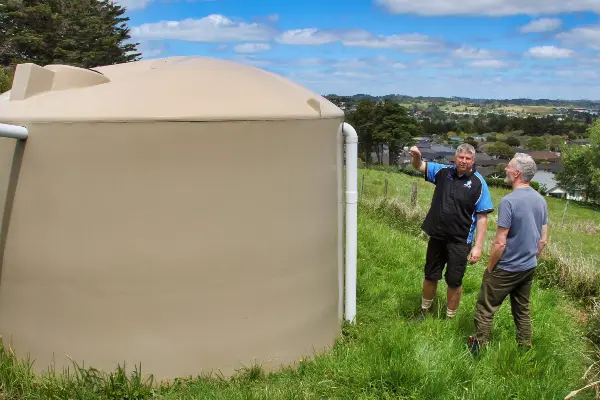
Steve from Aqua Works offers a free onsite assessment to review your existing water storage, roof catchment, site access and water system. Together, we can work out whether adding a second tank, replacing your current one or making other improvements is the most practical option.
If additional storage is the way forward, Aqua Works can take care of the complete water tank installation, from tank supply and site preparation to plumbing, pump connections and commissioning.
With over 25 years of experience helping local households manage their water supply, we understand that getting the right setup matters just as much as choosing the right tank.
Let’s find the right water storage solution for your property.
Not sure whether you need a second tank or a larger replacement? We’ll assess your existing water system, discuss your options and help you find the most practical solution for your home.
Book your free onsite assessment.
Frequently Asked Questions About Adding A Second Water Tank
Can I connect two water tanks of different sizes?
Yes. Water tanks of different capacities can often be connected to the same rainwater system. However, their location, water levels, connecting pipework and overflow arrangements need to be considered to ensure you can make effective use of the additional storage.
Will adding a second water tank improve my water pressure?
Not necessarily. A second tank increases your water storage capacity, but household water pressure depends mainly on your pump, pressure system and pipework. If you’re experiencing low or fluctuating pressure, it’s worth identifying the cause before making changes.
Can I use one water tank while the other is being cleaned or repaired?
Yes, if the plumbing is designed to allow the tanks to be isolated and the remaining tank can continue supplying the house. Two connected tanks don’t automatically provide independent backup storage, so this is worth considering when planning your installation.
Will I need to upgrade my water filtration or UV system if I add a second tank?
Not necessarily. Adding another water tank doesn’t automatically mean you need different water treatment equipment. However, your existing filtration and UV system should be checked to ensure it’s suitable for the water source, flow requirements and overall system configuration.
More on water tanks: is your water tank ready for a dry summer?, how we install a water tank, and our water tank installations in Warkworth, Matakana, Omaha, Leigh and Mangawhai.