Hard Water
Testing and Water Softener Solutions for Bore Water
Call 0800 278 296 to talk to a water expert
Do you have hard water?
White scale on taps and shower heads, a furred-up kettle, pipes losing pressure and hot water cylinder elements that keep failing are all signs of hard water. For our customers, hard water is mainly a bore water problem. Rainwater is naturally soft. Hard water is one of the contaminants in drinking water we help homeowners deal with.
Hard water isn’t a health risk, but it costs you money. Scale furs up pipes, fittings and hot water cylinders, and hard bore water often comes with a higher pH, which brings its own problems.
What is hard water?
Hard water is high in dissolved calcium and magnesium, picked up as groundwater moves through rock. Hardness is measured in mg/L as calcium carbonate. The Taumata Arowai aesthetic value for total hardness is 200 mg/L. Above that, scale and soap scum build up.
Getting your water tested is the first step. If hardness is the problem, a correctly sized water softener is the fix.
Understanding hard water in your home
Signs you have hard water
- White scale on taps, shower heads and glass
- A kettle that furs up quickly
- Soap and shampoo that don’t lather well, and scum on the bath
- Water pressure dropping as pipes fur up
- Hot water cylinder elements that keep failing
What hard water does to your home
- Furs up pipes, fittings and tempering valves
- Coats the elements in hot water cylinders and builds up in heat pump water heaters, cutting efficiency and shortening their life
- Clogs shower heads and mixers
- Wears out dishwashers and washing machines
- Builds scale on the UV quartz sleeve, so less UV light gets through
Could your water be affected?
- Do you use bore water?
- Are you seeing white scale you can’t keep on top of?
- Have you replaced a hot water cylinder element recently?
- Is your water pressure dropping over time?
- Has your bore water never been tested?
Concerned about hard water? Start with testing.
A comprehensive lab test measures hardness, pH, iron, manganese and silica. These often come together in bore water, and they change which softener and set-up will work. We arrange testing through Hill Laboratories in Hamilton, an accredited lab, and we never specify a system without one.
What doesn’t work
Hardness is dissolved calcium and magnesium, so most everyday fixes only treat the symptoms.
Common approaches that don’t work include:
- Descaling products: they clean off scale, but it keeps coming back
- Shower head and jug filters: they don’t soften the water for the whole house
- UV and carbon filters: they don’t remove hardness
- Boiling: it drops the scale out in your kettle
Why pH matters
Hard bore water often comes with a higher pH. Water with a high pH can taste and feel soapy, and scale forms faster as pH rises. We look at hardness and pH together when we design your system.
Hard water or silica?
Both leave white marks. If the marks won’t wipe off, it may be silica, which a water softener won’t remove. A water test tells you which one you have.
Is hard water bad for you?
Hard water isn’t a health risk to drink at the levels found in drinking water
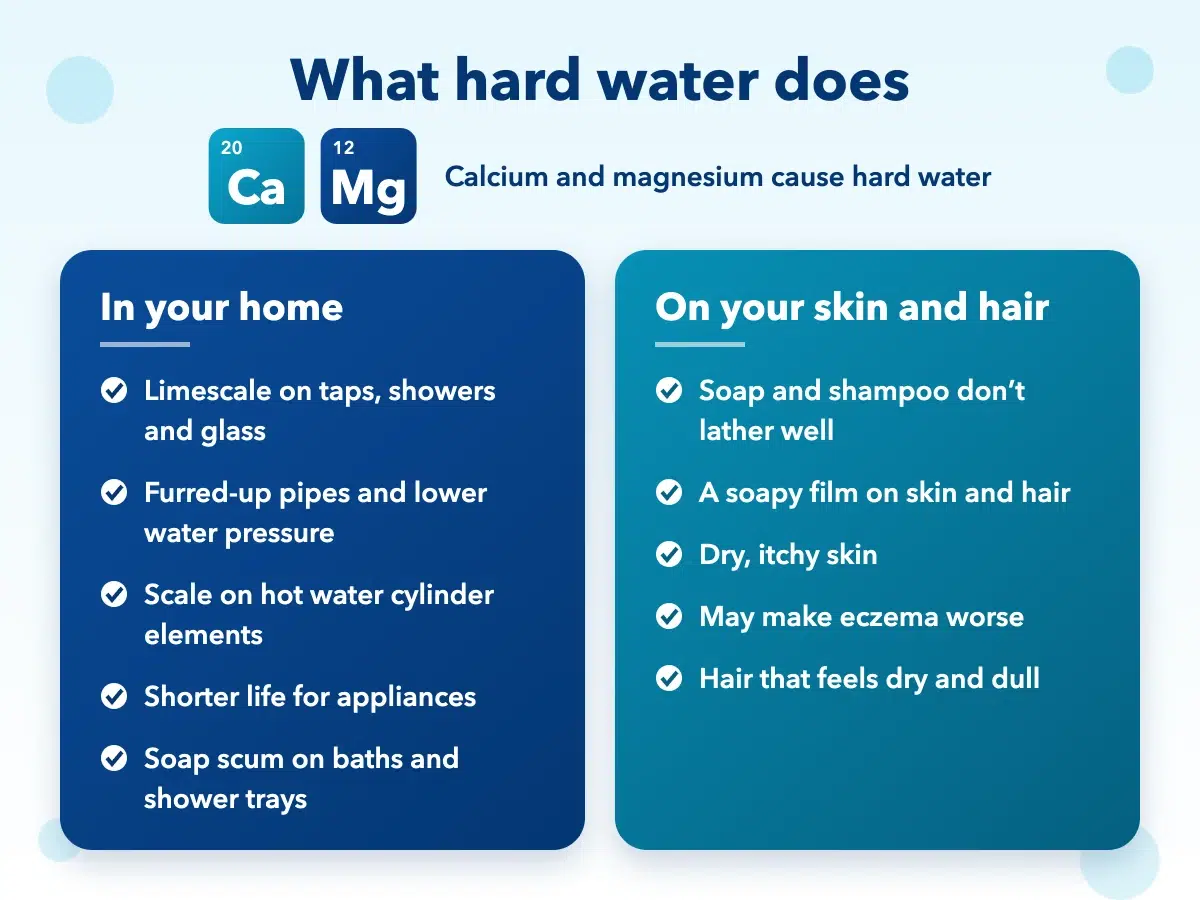
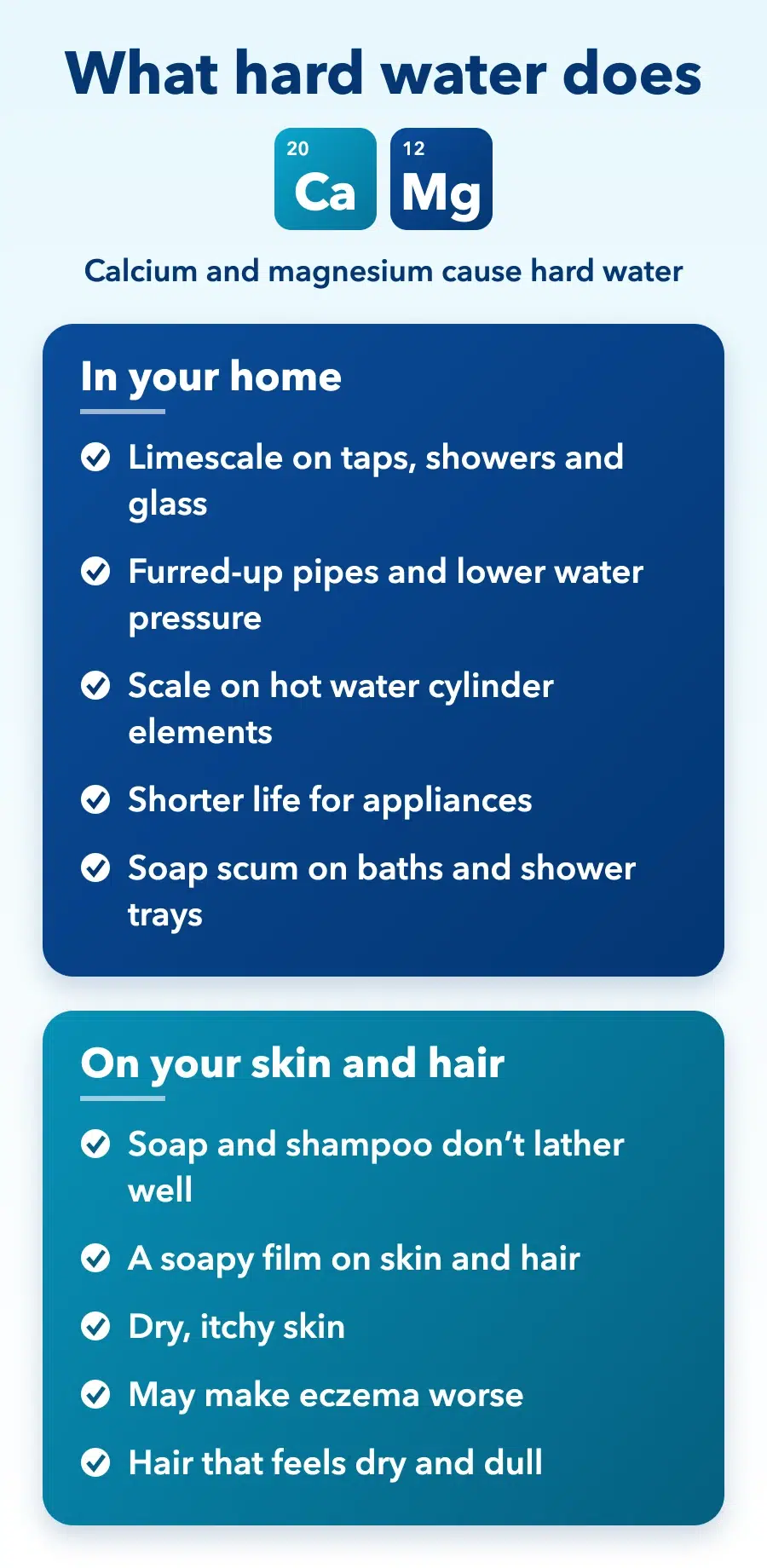
Soap and shampoo don’t lather well, and leave a soapy film on skin and hair
It can leave skin dry and itchy, and may make eczema worse
Many people find their hair feels dry and dull
A high pH can give water a soapy taste and feel
Hard water won’t harm your health to drink, but it’s hard on your skin and hair, and it costs you money in failed elements, damaged cylinders and appliances, and furred-up pipes.
How Aqua Works fixes hard water
A water softener is the way we treat hard water, and it has to be sized and set up for your water chemistry.
1
Test your water
Every job starts with a comprehensive lab test through Hill Laboratories. In our area, hardness often comes with iron, manganese and silica, so we need the full water chemistry first.
2
Plan and design
We size the softener to your hardness, water chemistry, flow and household use, and agree the plan with you before any work starts.
If the softener doesn’t match the water, it won’t work.
3
Install and commission
We install your water softener, usually an Ecosoft or Kinetico unit with ECOMIX® resin, then commission it and test the water.
Kinetico softeners don’t need power to run, which suits rural sites.
4
Service and retest
Softeners need salt top-ups and regular servicing to keep working.
We keep a record of your system, remind you when it’s due for a service and retest your water when needed.
The problem, and the fix
What scale does to a heating element, and how we stop it.
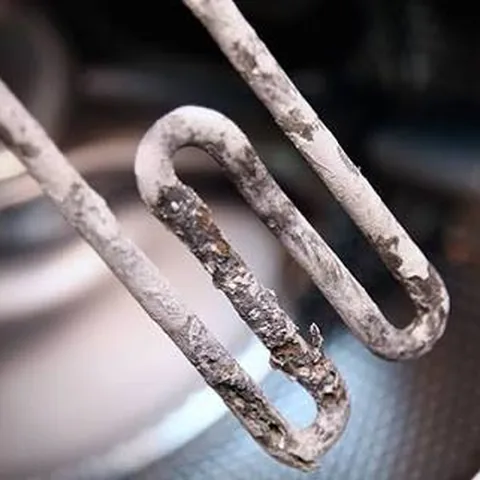
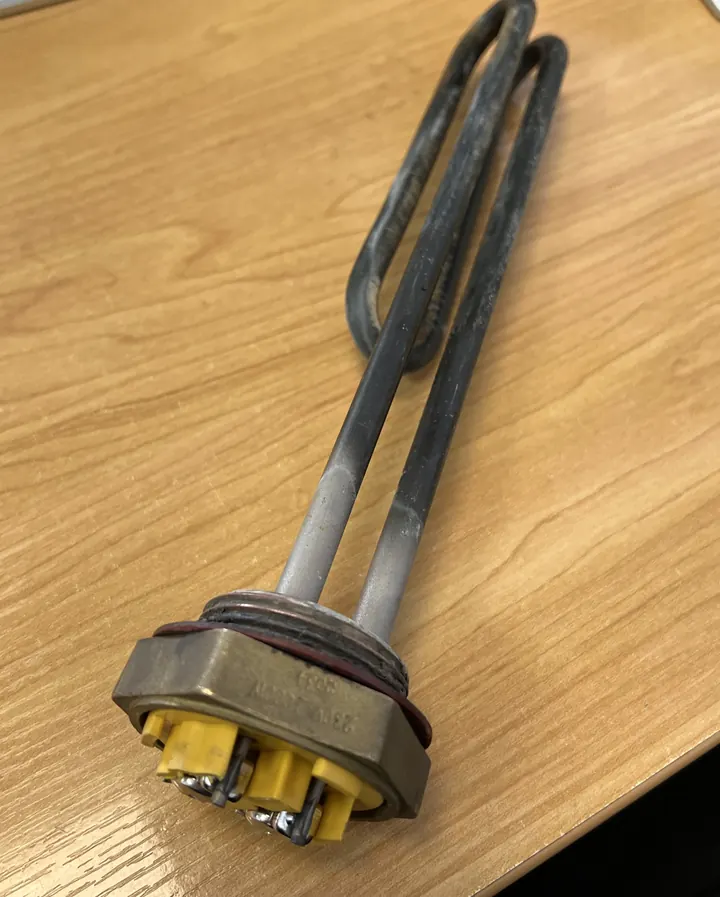
How it starts: limescale from hard water builds up on heating elements in cylinders and appliances.
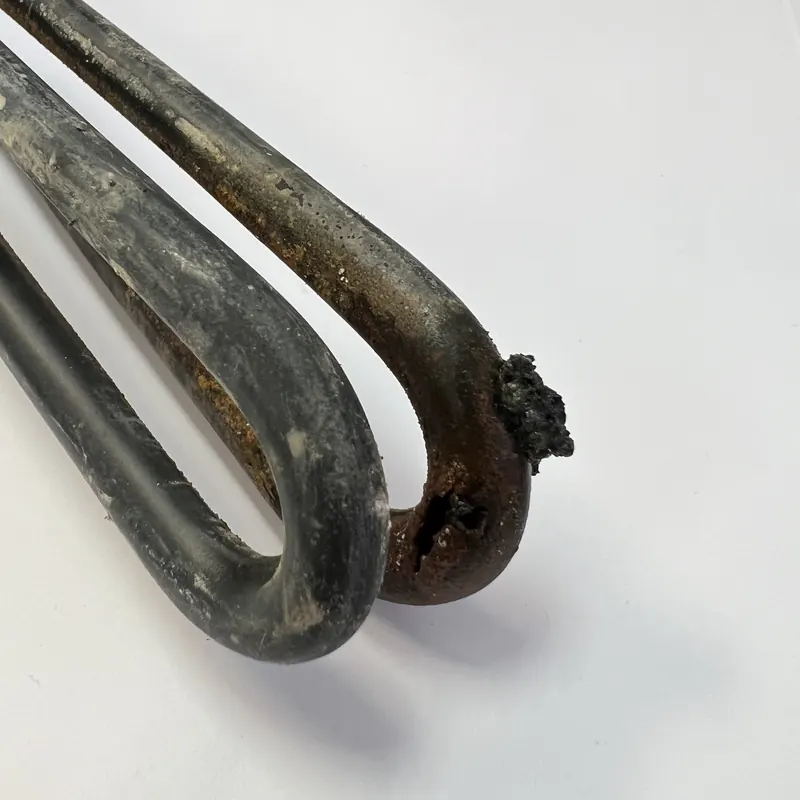
The damage: scale from hard bore water built up on this hot water cylinder element until it failed.
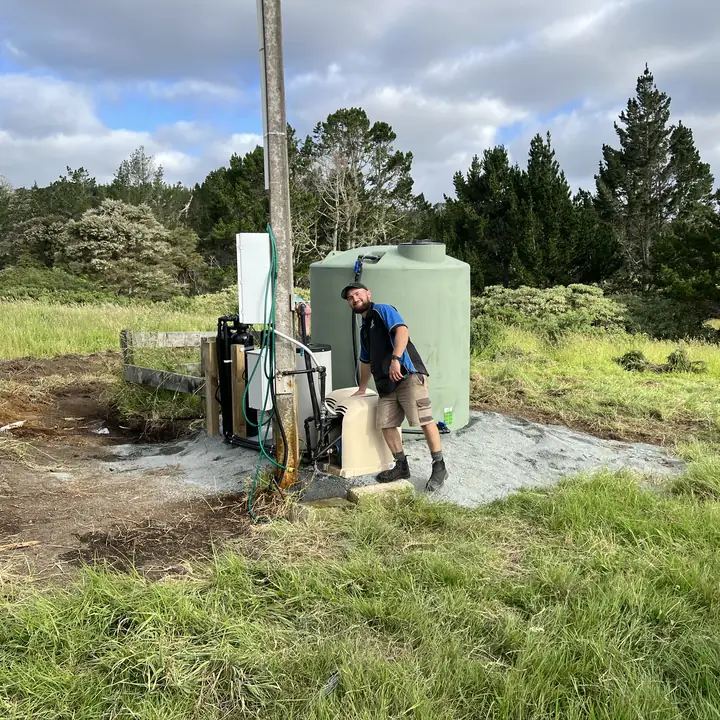
The fix: a water softener, sized from a full water test. This Kinetico softener with ECOMIX® resin runs without power.
Stop scale at the source
Protect your hot water cylinder, pipes and appliances with a water softener designed for your bore water.
Hard water FAQs
What is hard water?
Hard water has high levels of dissolved calcium and magnesium. Groundwater picks them up as it moves through rock, so hard water is mostly a bore water issue. Rainwater is naturally soft.
How do I tell if I have hard water?
Common signs are white scale on taps and shower heads, a kettle that furs up, soap that doesn’t lather well, and hot water cylinder elements that keep failing. A lab test tells you exactly how hard your water is.
Is hard water bad for you?
Not to drink. Hard water isn’t a health risk at the levels found in drinking water. The problems are scale, damage to your hot water cylinder, pipes and appliances, a soapy taste if the pH is high, and the effect it can have on your skin and hair.
Does hard water affect skin and hair?
It can. Calcium and magnesium react with soap and shampoo, so they don’t lather well and can leave a film on your skin and hair. Many people notice dry, itchy skin and dull hair. Research from King’s College London and the University of Sheffield found washing in hard water can damage the skin’s natural barrier and may contribute to eczema.
What level of hardness is a problem?
The Taumata Arowai aesthetic value for total hardness is 200 mg/L as calcium carbonate. Above that, scale and soap scum build up. Very soft water, below about 100 mg/L, can be more corrosive.
How do I fix hard water?
For bore water, a water softener is the way to treat hard water for the whole house. It uses ion exchange to swap calcium and magnesium for sodium. We install Ecosoft and Kinetico softeners with ECOMIX® resin, sized from a full water test.
Does a water softener add salt to my water?
A water softener adds a small amount of sodium as it removes hardness, but it doesn’t make the water salty. If you’re on a low-sodium diet or making baby formula, talk to us about adding a reverse osmosis system for your drinking water.
Can a water softener remove iron too?
Yes. A softener with ECOMIX® resin removes iron and manganese as well as hardness, which is why it often suits bore water. Read more about iron and manganese in water.
Will a water softener remove white spots on my shower glass?
If the spots are from hardness, yes. If they’re from silica, a softener won’t remove them. A water test tells you which one you have.
Does hard water damage hot water cylinders?
Yes. Scale builds up on the element and inside the cylinder, which cuts efficiency and can cause the element to fail. It also builds up in heat pump water heaters. Softening the water protects them.