
Chlorine in Water
Filters for Chlorine Taste and Smell in Town Water
Call us to talk to a water expert
Why does my tap water taste of chlorine?
If you’re on a council or Watercare town supply, your water is treated with chlorine. It kills bacteria and viruses at the treatment plant, and a small amount stays in the water all the way to your tap to keep it safe in the pipes. That leftover chlorine is what you taste and smell.
Chlorine is one of the contaminants in drinking water we help with, but it’s a different kind of problem. At normal levels it’s there to protect you, not harm you. For most people it’s about taste and smell, and for many people it’s their skin.
Under the Water Services Act 2021, town supplies must keep a residual disinfectant in the water, usually chlorine, unless Taumata Arowai grants an exemption. So if you’re on town water, chlorine is part of the deal.
Town water can also carry heavy metals, such as lead and copper picked up from older pipes and fittings. We can filter out a wide range of heavy metals too, either at one tap in the kitchen or with a whole-house system.
You don’t have to put up with the taste. A carbon filter removes chlorine from your drinking water, and a whole-house filter takes it out of every tap and shower.
Book a FREE Site Visit

Understanding chlorine in drinking water
Where does chlorine in water come from?
- Town supply: chlorine is added at the treatment plant and kept in the pipe network
- Water deliveries: water carriers usually fill tanks from a treated town supply, so a delivery can bring chlorine with it
- Cleaning and new pipework: chlorine is used to disinfect tanks and new pipes before they’re used
- Bleach in the tank: some people add it themselves, which we don’t recommend
How much chlorine is in town water?
Taumata Arowai’s aesthetic value for free chlorine is 0.3 to 1.0 mg/L. That’s the range where most people start to taste or smell it, though some people notice it at lower levels. The health limit is 5 mg/L, much higher than you’ll find in normal tap water.
Suppliers aren’t allowed to cut back on disinfection just to avoid taste complaints. Watercare told RNZ that some people are quite sensitive to the taste, but it doesn’t make the water less safe.
Signs of chlorine in your water
- A swimming pool taste or smell from the tap
- A stronger smell in a hot shower or bath
- Tea and coffee that don’t taste right
- Tank water that tastes of chlorine after a water delivery
- A taste that comes and goes as chlorine levels change
Had enough of the chlorine?
Book a free site visit.
We’ll come to you, talk through the chlorine and any heavy metals from older pipes and fittings, and work out the right filter for your home.
What works and what doesn’t
Chlorine dissolves in water as a gas, so it behaves differently from minerals and metals.
- Activated carbon works: carbon filters remove chlorine taste and smell, which is why they’re in under-bench and whole-house filters
- Reverse osmosis works: reverse osmosis systems have carbon filters built in, and they also remove fluoride, nitrate and PFAS
- A jug in the fridge helps a little: a covered jug left to stand loses some of the taste, but it won’t help your shower
- UV filters and water softeners don’t: they aren’t designed to remove chlorine
Don’t add bleach to your tank
Bleach can react with leaves and sludge in a rainwater tank to form chemical by-products. If your tank needs disinfecting, talk to us first. Read more about whether adding chlorine or bleach to tank water a good idea?
Health effects of chlorine in drinking water
At normal levels, chlorinated town water is safe to drink
Chlorine protects you from bacteria and viruses in the pipe network
It can react with natural organic matter to form by-products called trihalomethanes (THMs)
THMs have their own strict limits in the drinking water standards
Chlorine can dry and irritate skin, and many people with eczema or sensitive skin react to it
Some people are sensitive to the taste and smell
The benefits of chlorine far outweigh the risks. If you’d rather not drink it or shower in it, a carbon filter removes it.
Eczema or sensitive skin?
What you can do
After taste, skin is the second most common reason people call us about chlorine. Lots of people with eczema and other sensitive skin conditions react to chlorine in their shower and bath water, from young children to adults.
- Notice when it flares up. If skin is drier or itchier after a shower or bath, chlorine may be part of the problem.
- Keep showers short and lukewarm. Hot water dries skin out and releases more chlorine as steam.
- Talk to your GP or dermatologist. Eczema has many triggers, and chlorine is only one of them.
- Take the chlorine out of your shower water. A whole-house filter removes it from every tap, shower and bath. For many of our customers, it makes a big difference to everyday life.
How Aqua Works removes chlorine from your water
The right filter depends on whether you want better drinking water, or chlorine-free water at every tap.
1
On-site assessment
We come to you, look at the problem, your plumbing and your water supply, and talk through what we can do. The site visit is free.
2
Plan the right filter
An under-bench filter for drinking and cooking, a whole-house filter for every tap and shower, or reverse osmosis if you want more taken out. We can filter out heavy metals too. We agree the plan with you first.
3
Install and commission
Our plumbers install the filter, flush it through and check the water at the tap.
4
Service and filter changes
Carbon filters stop working when they’re full, so cartridges need changing on time.
We keep a record of your system and remind you when it’s due for a service.
Your options for chlorine-free water
All three use carbon to take out the chlorine. The difference is how much water they treat, and what else they remove.

Under-bench filter
Chlorine-free water for drinking and cooking at the kitchen tap, with heavy metals filtered out too. The simplest and most popular option.

Whole-house filter
Treats all the water coming into the house, so the chlorine is gone from the shower and bath too. This is the one that helps sensitive skin.
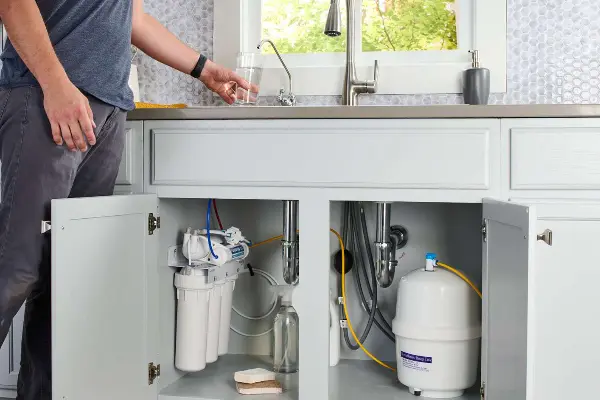
Reverse osmosis
Removes chlorine and much more, including fluoride, nitrate and PFAS, for your drinking water.
Chlorine in water FAQs
Is there chlorine in NZ tap water?
Yes, if you’re on a town supply. Under the Water Services Act 2021, council supplies must keep a residual disinfectant in the water, and it’s usually chlorine. Only a few supplies have an exemption from Taumata Arowai. Rainwater tanks and private bores aren’t chlorinated unless someone adds it.
Is chlorine in tap water safe to drink?
Yes. The drinking water standards set a maximum of 5 mg/L, and normal tap water has much less than that. Chlorine is there to stop bacteria and viruses growing in the pipes. If you don’t like the taste, a carbon filter removes it.
How much chlorine is allowed in drinking water in NZ?
The maximum acceptable value for health is 5 mg/L. Taumata Arowai’s aesthetic value for taste and smell is 0.3 to 1.0 mg/L of free chlorine, which is the range where most people start to notice it.
Why does my water smell like chlorine all of a sudden?
Chlorine levels change through the network. Homes closer to the treatment plant usually get more, and suppliers sometimes raise the dose, for example after work on the pipes. If you’re on tank water, a recent water delivery from a town supply is the usual cause. If the smell is very strong or doesn’t settle, call your water supplier.
How do I remove chlorine from my tap water?
Activated carbon is the answer. An under-bench filter treats your drinking water, a whole-house filter treats every tap and shower, and a reverse osmosis system removes chlorine along with fluoride, nitrate and PFAS. Cartridges need changing on time to keep working.
Can I get rid of the chlorine smell in my shower?
Yes. A whole-house filter removes chlorine before the water reaches your shower, bath and laundry. Hot water releases more chlorine as steam, which is why the smell is often stronger in the shower.
Can chlorine in water make eczema or skin irritation worse?
For many people, yes. After taste, skin is the most common reason people call us about chlorine. Chlorine can dry out the skin, and lots of people with eczema and other sensitive skin conditions find their skin flares up in chlorinated shower and bath water. We see it in young children and in adults.
A whole-house filter takes the chlorine out of the water you shower and bathe in, and our customers tell us it can make a real difference. Eczema has many triggers, so keep working with your GP or dermatologist too.
Does boiling or leaving water in the fridge remove chlorine?
Both help a little. Boiling drives some chlorine off, and a covered jug left to stand in the fridge loses some of the taste. They’re fine for a glass of water, but not practical for the whole house.
What are chlorination by-products in drinking water?
When chlorine reacts with natural organic matter, like leaf litter in a river, it can form by-products such as trihalomethanes (THMs). The drinking water standards set strict limits for them, for example 0.4 mg/L for chloroform, and suppliers monitor them. Some carbon filters are certified to reduce them too.
Why is there chlorine in my tank water?
Usually because of a water delivery. Water carriers fill tanks from a treated town supply, so it can taste of chlorine for a while. It fades as the water is used and the tank refills with rainwater. Chlorine may also have been used to clean the tank.
Should I add bleach to my water tank?
We don’t recommend it. Bleach can react with organic matter in the tank to form by-products, and it doesn’t address the root cause. For ongoing protection from germs, a UV water filter is the better option.