Bore Water Treatment and Filters
Every bore is different, so we test first.
Book a FREE onsite visit.
Is your bore water safe to drink?
Bore water often looks clear, but every bore is different. Depending on the ground and what’s around the bore, it can carry bugs like E. coli, and minerals like iron, manganese and calcium that stain, smell or scale up your pipes.
That’s why we never recommend treatment for bore water without a full water test. The water chemistry decides what will work. Get it wrong and the system won’t do its job, or you pay for something you don’t need.
We’ve tested, treated and serviced bore water systems across Rodney and North Auckland since 2000, from Mangawhai to Albany. We also put in new bore pumps and repair ones that have failed.
Start with a free onsite visit.
From the bore to the tap
Every part of a bore water system affects the water you drink. Tap a step to find out more.
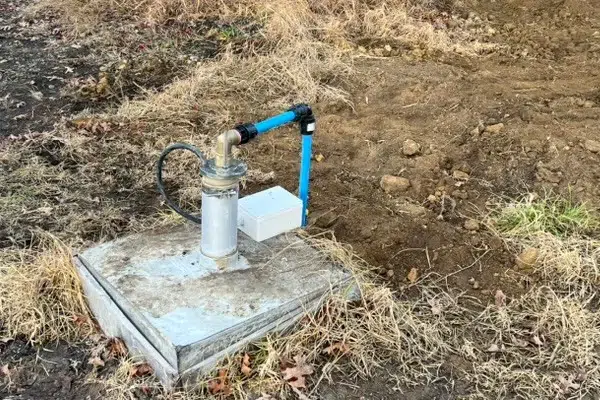
Bore pumps
We put new pumps down the bore, even 150 metres down, and repair ones that have failed.

Storage tank and level gauge
Many bores pump into a storage tank. A level indicator shows how much water you have, on your phone.

Ozone in the tank
Gets rid of the rotten egg smell, takes out mild iron and manganese, and keeps the stored water clean.
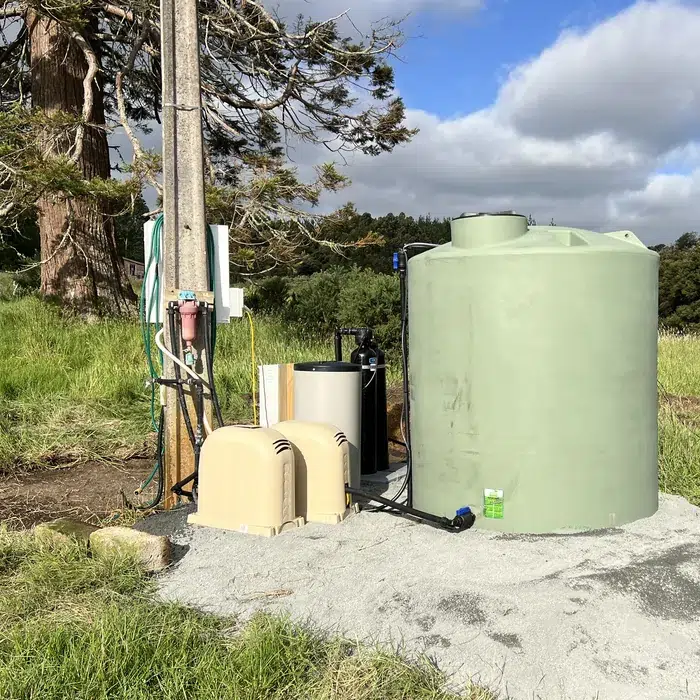
Water softeners
Take out iron, manganese and hardness, the cause of orange stains and white scale.
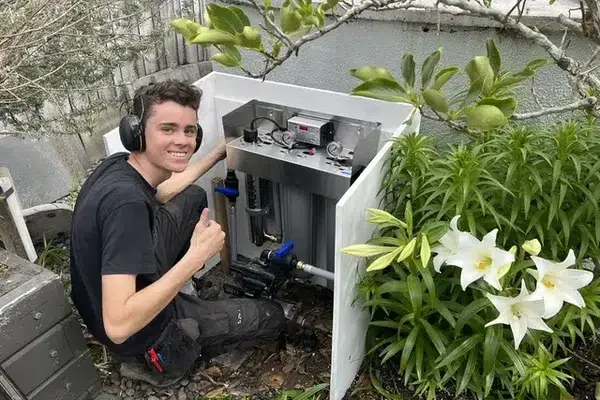
Filters and UV
Sediment filters and UV kill the bugs, once the iron and hardness have been dealt with.
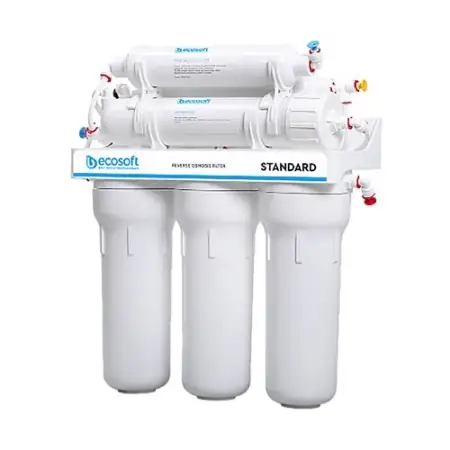
Reverse osmosis
An under-bench system at the kitchen tap is how we take nitrate out of drinking water.
Why we always test bore water first
Every bore is different, and the water can change over time. Before we recommend anything, we take a sample and send it to Hill Laboratories, an accredited lab, for a full test set up just for us. It shows us:
- E. coli, when we need to know whether bugs are getting into the bore.
- Iron and manganese, which stain basins and laundry orange, brown or black.
- Hardness (calcium and magnesium), which leaves white scale on taps, glass and your hot water cylinder.
- pH, because acidic water eats copper pipes and fittings.
- Nitrate, which washes down from farmland.
- Silica, a big problem in our area, so it’s in every test we order.
- Sodium and other minerals that change which treatment will work.
Then we design the system around those results, and the order matters. Iron, manganese and hardness have to come out before the UV, or they coat the UV sleeve and block the light. That’s why a filter off the shelf rarely works on bore water. If you drink your bore water, test it again at least every two years, because things change.
What can be in bore water
Bore water comes from underground, so it carries whatever it has picked up on its way through the ground. Around Rodney and North Auckland we often find iron, manganese, calcium hardness and silica. They stain, scale up pipes and fittings, and stop other treatment from working.
Bugs can get in too, especially in shallow bores, bores that aren’t well sealed, and bores near septic tanks or stock. You can’t see, smell or taste them, so clear water isn’t proof that it’s safe. Iron bacteria can be a real problem in bores too.
As a rule of thumb, bore water needs filtration and UV before you drink it, even when the test comes back good. If the bore fills a storage tank first, UV or ozone after the tank is a must.
Rotten egg smell? Ozone in a tank
A rotten egg smell is hydrogen sulphide gas. Our usual fix is to pump the bore water into a tank near the bore, treat the water in that tank with ozone, and pump it to the house from there. Ozone gets rid of the smell, keeps the stored water clean, and takes out mild iron and manganese too. See ozone tank treatment.
One bore for the house and the stock troughs
On farms and lifestyle blocks, one bore often feeds the house and the stock troughs. Every trough connection needs proper backflow protection, so dirty trough water can’t be drawn back into the line. If the house is at the end of the line with the troughs in front of it, that’s a big problem. We fix it by putting a small tank and pump at the house with ozone in the tank, or by switching the house over to rainwater. The air gap at the tank stops backflow, and the ozone deals with the bugs.
Signs your bore water needs attention
A rotten egg smell.
Orange, brown or black stains.
White scale on taps, glass and the jug.
Blue-green stains on basins or showers.
A metallic taste.
Cloudy or discoloured water.
Someone in the house has been sick.
Low water pressure.
No water test in the last two years.
What we install
- UV systems with sediment filters.
- Water softeners for iron, manganese and hardness.
- Ozone in a storage tank.
- pH neutralisers for acidic water.
- Under-bench reverse osmosis for nitrate.
- New bore pumps.
What we service
- pH neutralisers.
- Water softeners, most makes and models.
- UV systems and filters.
- Ozone systems.
- Bore pumps that have failed.
Bore water you can trust, from every tap.
Local Jobs – Local Trust – Local Experts
Recent bore water jobs
A few of the bore water systems we’ve installed and look after.
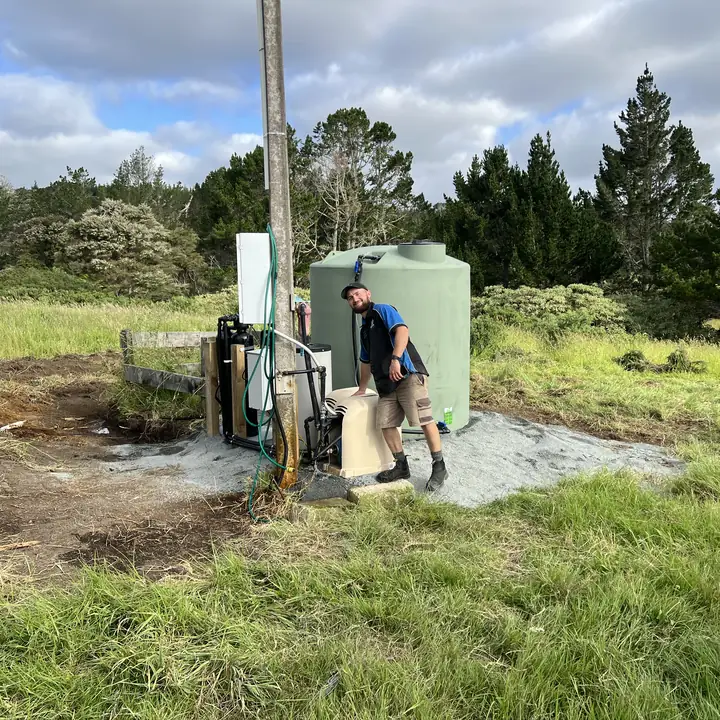
Kaipara Harbour: this bore water had a lot of iron. We tested it, designed a new system and replaced everything on site, with a Kinetico softener and ECOMIX resin.
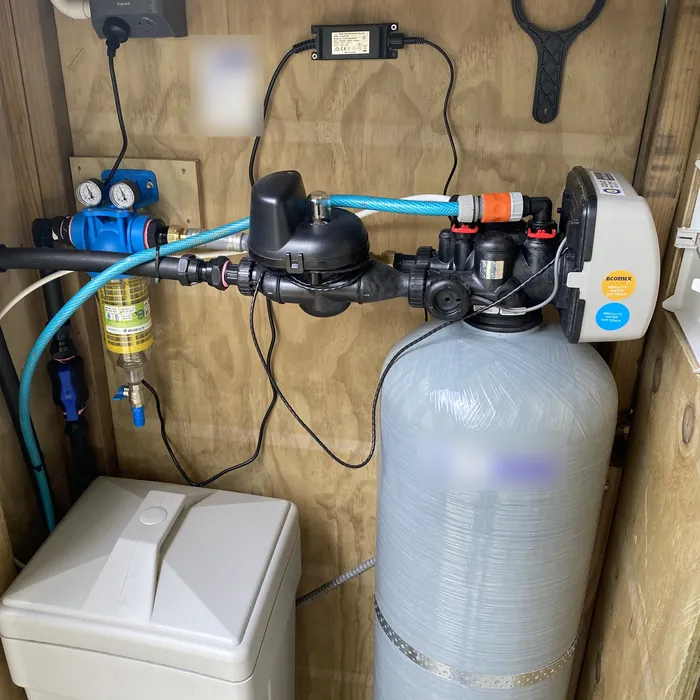
Ecosoft softener: an Ecosoft unit with ECOMIX resin, treating bore water that tops up the house tank.
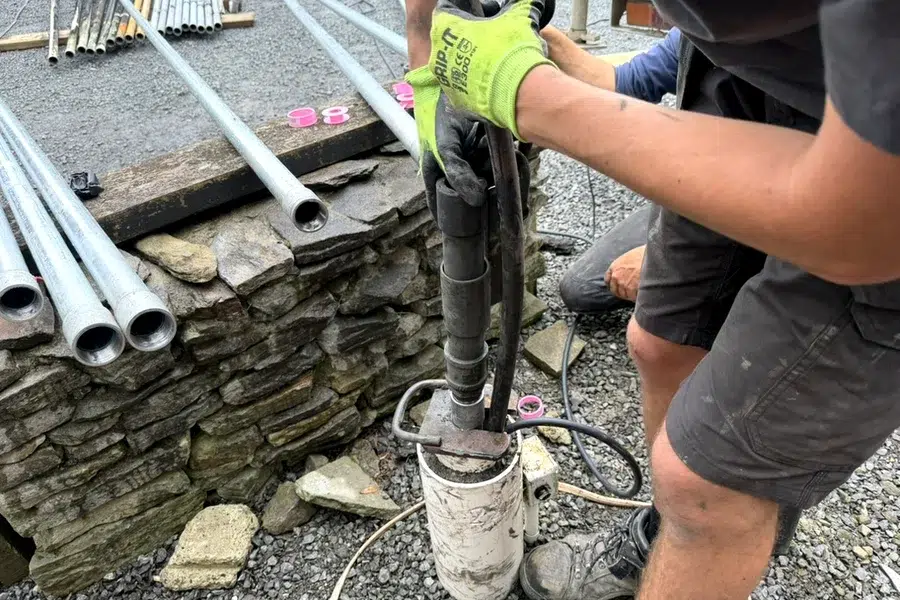
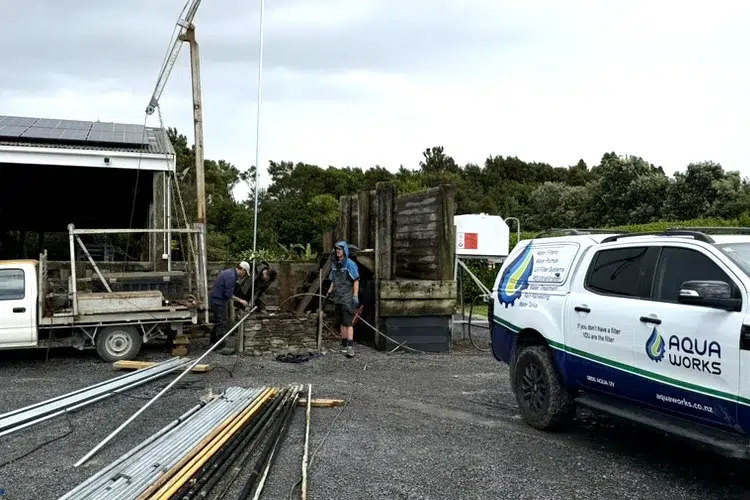
Helensville: this bore pump was 150 metres down. We pulled it up, fitted a new pump and replaced all the galvanised pipe.
Look after the bore
Good water starts at the bore. The bore head should be sealed and sit above the ground, so surface water can’t run down beside the casing, and stock, septic tanks and chemicals should be kept well away from it.
If the bore also feeds stock troughs, make sure every connection has proper backflow protection. Many bores pump into a storage tank first: keep that tank sealed and clean like any water tank, and a tank level indicator shows you how much water you have, so you spot a pump problem before you run dry.
How often to test your bore
The household water supplies guide (ESR, 2021 update) suggests testing for bugs every three months and the chemistry every year. For a home on its own bore, that’s guidance rather than a rule. Registered drinking water suppliers and businesses have their own requirements, and a rental must have potable water.
In practice, many homes go years without a test. If you drink your bore water, we recommend a full test at least every two years, and sooner if the colour, taste or smell changes, after flooding, or if someone in the house gets sick. With a UV system, the right pre-treatment and a service every year, the bugs are dealt with between tests. That’s why we can guarantee E. coli-free water.
We take the sample on site, send it to the lab and go through the results with you. Renting out or selling? See safe water for rural rentals and sales.
How we sort your bore water
Every job follows the same four steps.
1
Free onsite visit
We look at the bore, the pump, any storage tank and the treatment you already have.
2
Test the water
We send a sample to an accredited lab for a full test, then go through the results with you.
3
Design and install
We design a system to match your water, install it, then commission and test it before we leave.
4
Service and retest
A service every 12 months, and a new water test at least every two years, so the system keeps up with your water.
Professional installation
Our own registered plumbers install bore water systems across Rodney and North Auckland, from Mangawhai to Albany.
- Designed around your water test.
- Fitted in the right order, so iron, manganese and hardness come out before the UV.
- Pipes sterilised after the install.
- Commissioned and tested before we leave.
Ongoing service and support
Every bore water system needs a service every 12 months. We service pH neutralisers, water softeners, UV systems, ozone and filters, most makes and models, and check the pump and storage tank while we’re there. We remind you when your next service is due.
Bore water FAQs
Is bore water safe to drink?
Not until it has been tested. Bore water often looks clear but can carry bugs like E. coli, and minerals like iron, manganese or nitrate. A full lab test tells you what’s in it and what treatment it needs. As a rule of thumb, bore water needs filtration and UV before you drink it.
How often should I test my bore water?
The household water supplies guide suggests testing for bugs every three months and the chemistry every year. For a home on its own bore that’s guidance, not a rule, and in practice we recommend a full test at least every two years if you drink the water. Test sooner if the colour, taste or smell changes, after flooding, or if someone in the house gets sick.
What is the best filter for bore water?
There isn’t one filter that suits every bore. The right system depends on what’s in your water, which is why we always test first. Most bore water systems have a few stages, for example a softener for iron and hardness, then sediment filters and UV.
Why does my bore water smell like rotten eggs?
That’s hydrogen sulphide gas. We usually pump the bore water into a tank near the bore and treat it with ozone, which gets rid of the smell. See ozone tank treatment.
How do I get rid of orange or black stains?
Orange and brown stains are iron, and black is usually manganese. Mild levels can be treated with ozone in a tank. Higher levels need a water softener with a resin that takes out iron and manganese. See iron and manganese in water.
My bore pump has stopped. Can you fix it?
Yes. We repair bore pumps that have failed and put new pumps down the bore, and we have the gear to do it. See water pumps. If you’re out of water, our 24/7 call-out line is 021 278 7427.
My bore feeds the house and the stock troughs. Is that a problem?
It can be. Every trough connection needs proper backflow protection. If the house is at the end of the line with the troughs in front of it, trough water can end up at your taps. We fix that with a small tank and pump at the house with ozone in the tank, or by switching the house to rainwater.
Can you service my existing bore water system?
Yes. We service pH neutralisers, water softeners, UV systems, ozone and filters, most makes and models. Every system needs a service every 12 months.
Can you remove nitrate from bore water?
Yes, with an under-bench reverse osmosis system at the kitchen tap. See nitrate in water.
How can I tell how much water is in my bore tank?
A tank level indicator shows the level on your phone, so you know before you run out and can spot a pump problem early.
How much does bore water treatment cost?
It depends on what’s in your water, so we can’t price it until it has been tested. We quote after a free onsite visit and a lab test of your water.
Don’t just take our word for it…

⭐⭐⭐⭐⭐
“We are very satisfied with our. Updated filter system installed by Aqua Works one year ago..our bore water is a treat to drink now and general washing much brighter…great service..a top team!👍👍”
Alec Brewis, 2022
⭐⭐⭐⭐⭐
“Steve came out and quoted on installing a UV system and tank filter, which I accepted and was promptly installed. Everything went as expected and site was left clean and tidy afterwards. Steve was great to deal with and gave us some tips for our bore as well. Strongly recommended as great local firm.”
Linda Matheson, 2020
⭐⭐⭐⭐⭐
“Great service, on time for appointment, quick and efficient water filter replacement and water testing. Very happy with the service provided. Cheers”
Trevor Isted, 2021
Want bore water you can trust?
Book a FREE onsite visit. We’ll test your water and design a system that matches it.