
Sediment Filters for Dirty or Cloudy Water
Tank, bore and stream water.
Book a FREE onsite visit.
Why is my water dirty or cloudy?
Dirty, cloudy or muddy water is usually sediment: tiny bits of sand, silt, clay, rust or plant matter carried in the water. The cloudiness is called turbidity, and it’s measured in NTU. Water only starts to look cloudy at about 4 NTU, says the World Health Organization, so water can look clear and still carry enough to block filters.
Where it comes from depends on your water:
- Rainwater tanks: dirt, leaves and bird droppings washed off the roof, and sludge on the tank floor that gets stirred up.
- Bores: sand and silt from the ground. A well-built bore shouldn’t produce much sand, so if yours does, the bore or the pump needs checking.
- Streams, springs and dams: they can turn muddy after heavy rain.
Not all dirty water is sediment. Bore water that comes out clear, then turns orange-brown as it sits, has dissolved iron in it: see iron and manganese. Milky water that clears from the bottom up in a few minutes is just air.
We fit and service sediment filters on tank, bore and stream water across Rodney and North Auckland, from Mangawhai to Albany.
Start with a free onsite visit.
What sediment does
Sediment is more than a looks problem.
It shields germs from your UV
Taumata Arowai says turbidity can block filters and make UV and chlorine less effective, because particles shade germs from the light. The household water supplies guide says turbidity should be below 1 NTU for disinfection, and UV makers such as Viqua say a 5 micron sediment filter must go before the UV. Cloudy water often carries germs as well.
It wears out pumps, taps and appliances
Sand and grit wear pumps, block tap aerators and shower heads, and damage valves, dishwashers and washing machines. BRANZ says the first filter, which catches sediment, dirt and rust, cuts the risk of damage to tapware and appliances and helps the next filter last longer.
It builds up in your hot water cylinder
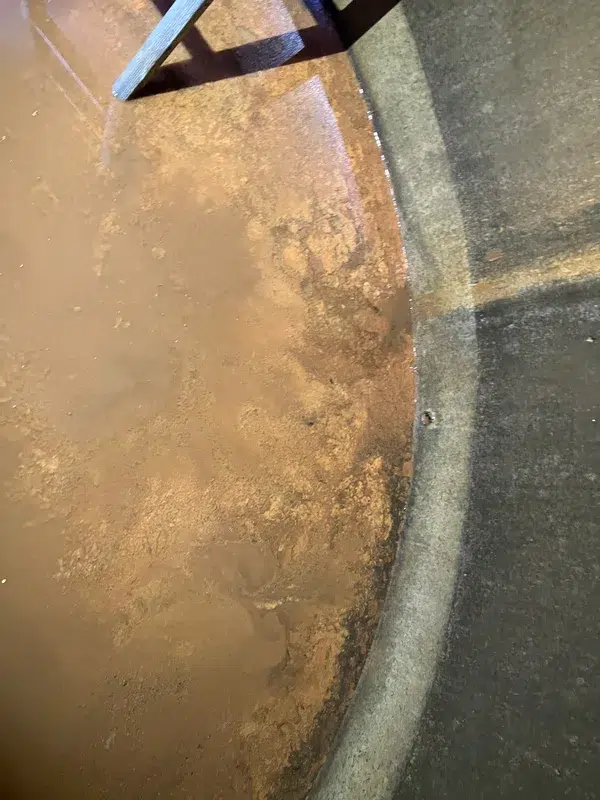
Sediment settles in the bottom of the cylinder over the years. The photo below shows what drained out of an old one: see hot water cylinders.
It blocks your filters
The more sediment in your water, the faster your cartridges clog and your water pressure drops. If you’re changing filters more than once a month, Taumata Arowai says you may need extra filtration. That’s when a screen filter or a backwashing media filter earns its keep.
Signs of a sediment problem
Brown, yellow or muddy water from the taps.
Cloudy water that doesn’t clear in a glass.
Grit or sand in the bottom of a glass.
Sand in tap aerators and shower heads.
Filters that turn brown or black within weeks.
Water pressure that drops, then comes back after a filter change.
Dirty water after heavy rain.
A dirty film on the UV sleeve.
Sediment when the hot water cylinder is drained.

A clogged pleated sediment filter. Every brown fold is dirt that didn’t reach the UV, the taps or the cylinder.
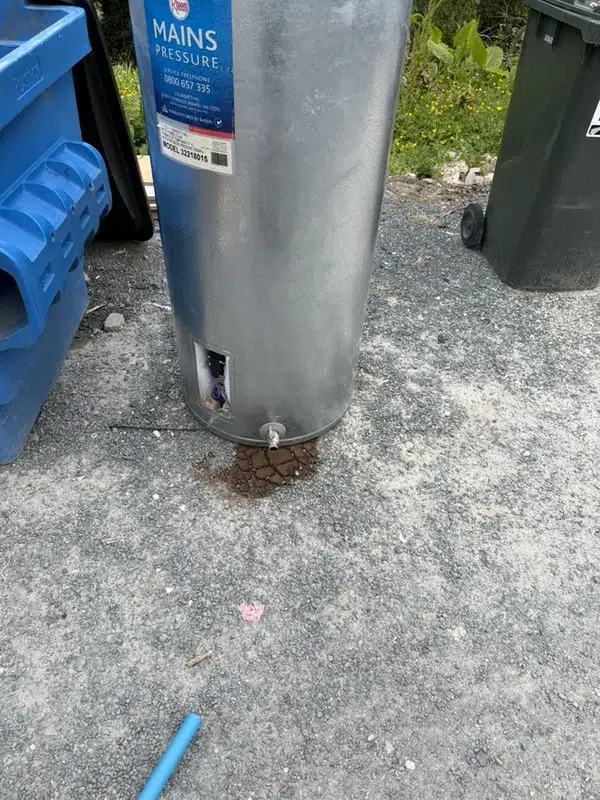
Sediment from an old hot water cylinder. It drained out of the bottom inlet when we replaced the cylinder.
What a sediment filter does
- Catches sand, silt, dirt and rust.
- Keeps the water clear enough for your UV to work.
- Protects your taps, appliances, softener and hot water cylinder.
- Filters the water for every tap in the house.
What it doesn’t do
- Kill bugs. You still need a UV system.
- Take out dissolved iron. That needs oxidising first, then filtering.
- Clean your tank. If it’s full of sludge, clean the tank first.
- Remove tea-coloured tannins. They need a different treatment.
Clear water first, then safe water.
Local Jobs – Local Trust – Local Experts
Recent dirty and cloudy water jobs
A few of the sediment problems we’ve sorted.

Omaha: cloudy, spluttering water that turned out to be air, not dirt. A leaking suction line was letting air into the pump, and new foot valves fixed most of it.
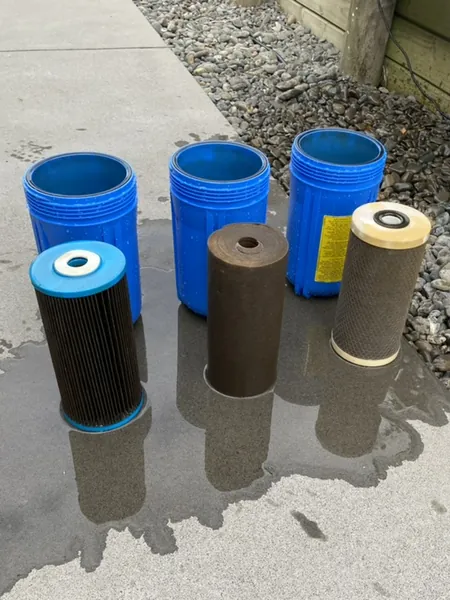
Coatesville: a year’s sediment on the cartridges at an annual service. The first one catches the most, so the next one lasts longer.
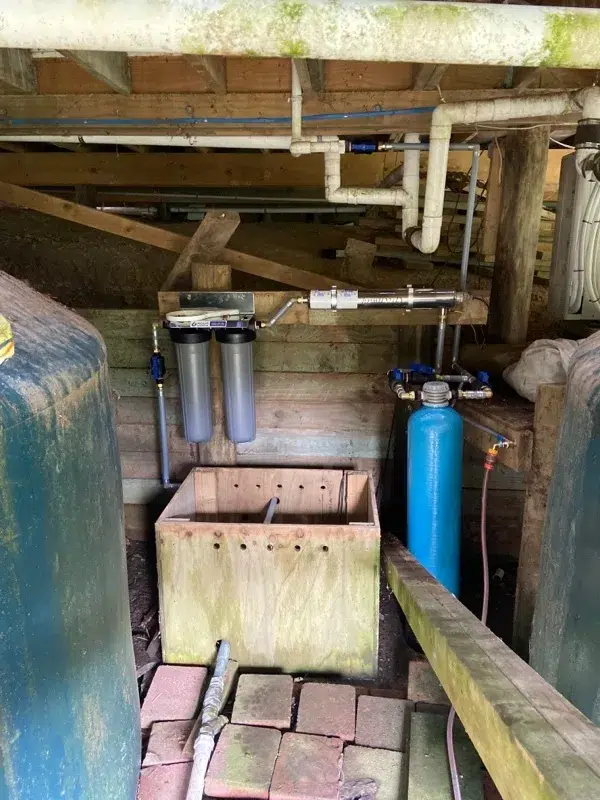
Coatesville: a backwashing multimedia filter takes out the heavy sediment, then twin cartridges and a UV system finish the job.
How we filter sediment
For most homes we fit twin big grey filter housings, 10 inch, or 20 inch for a big house. Each takes a triple gradient cartridge: spun polypropylene in three layers, coarse on the outside and fine on the inside, so it holds more dirt before it blocks.
On tank or bore water the first cartridge goes from 70 to 50 to 20 micron, and the second from 20 to 10 to 1 micron, before the UV. On town water the first is 20 down to 1 micron, and the second is carbon and KDF for chlorine, taste and smell.
On bores we usually add a Hydra self-cleaning screen ahead of everything. Its 90 micron mesh takes out the first lot of sand and grit, protects the cartridges, and is easy to service: you open a valve to flush it out.
Cartridge, screen or media filter?
There are three ways to take sediment out of water, and many systems use more than one.
Cartridge filters
The standard for most homes. They’re compact, they cost the least to start with, and they take out fine particles. The catch is that they need changing, and the dirtier your water, the more often.
Self-cleaning screen filters
A mesh screen in a clear bowl, like the Atlas Filtri Hydra. It catches sand and grit, you can see when it needs cleaning, and you flush it out through a valve. It won’t stop fine silt or cloudiness, so it goes ahead of the cartridges, not instead of them. With an automatic K-Matic valve it flushes itself.
Backwashing media filters
A tall tank filled with layers of filter media, such as sand, anthracite and garnet. Every so often it cleans itself, running water backwards through the media to a drain. There are no cartridges to change, and it handles heavy sediment and very high flows. It needs a drain and enough pump flow to backwash, and it uses some water each time, which matters on tank water.
We fit them where there’s a lot of sediment and on commercial sites that use a lot of water every day. For a fully automatic system we pair an automatic Hydra screen with an automatic backwashing media filter, so nobody has to change filters. A fine cartridge still goes before the UV, as UV makers require.
Which you need depends on a water test, how much water you use and how much looking after you want to do.
Fix the source first
A filter can only do so much. If the water coming in is very dirty, fix that first, or you’ll be changing filters every few weeks.
Rainwater tanks. The household water supplies guide says to clean tanks at least once a year, and whenever the water turns coloured or cloudy. We use Cross Country Tank Cleaning and Mobi Kair. Gutter guards and a first flush diverter keep most of the dirt out in the first place: see rainwater harvesting.
A floating outlet draws water from just below the surface, where it’s cleanest, instead of near the sludge on the floor. We fit them often. They’re a nice extra rather than a must: on a budget, the UV and filters come first.
In Matakana in August, the owners had changed their own filters, but the bath still ran dirty. Jakob found both tanks very dirty and discoloured. The fix was a tank clean and a fresh load of water first, then the new filters.
Bores. A properly built bore shouldn’t produce much sand. If yours does, the bore screen may be damaged or the pump set too low. We’ll check it and tell you whether it needs your driller.
Test your water
A lab test measures turbidity, the cloudiness, and can check for iron, manganese and E. coli as well. It tells us whether the problem is sediment, iron or something else, how fine the filtering needs to be, and whether you need a screen or media filter too.
A glass of water can’t tell you the turbidity is low enough for UV: that takes a meter. See water testing.
How we fix dirty water
Every job follows the same four steps.
1
Free onsite visit
We look at your water source, tanks or bore, pump, filters and UV.
2
Test the water
We check the water on site and send a sample to the lab if needed.
3
Install
Our registered plumbers fit the filters to suit your water and how much you use.
4
Service
We change your cartridges and check everything each year, and remind you when it’s due.
Sediment and the rest of your system
Tap a card to find out more.

Rainwater tanks
Filters and UV that make tank water safe to drink.
Bore water
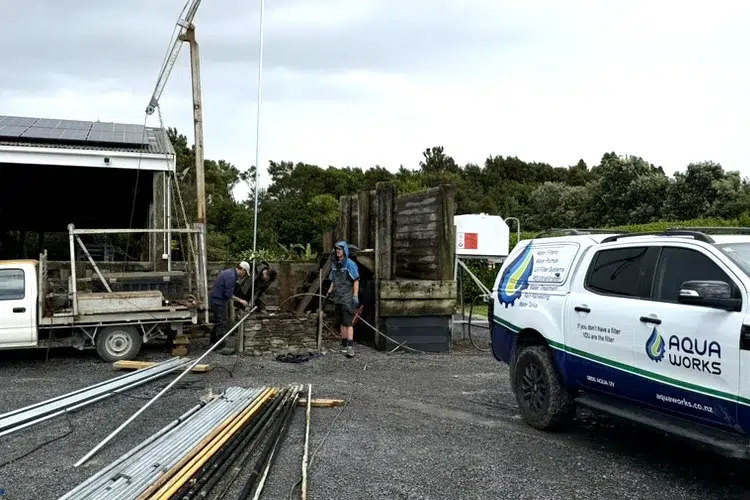
Sand, iron or hard water: we test bore water and design the treatment to suit.

Surface water
Stream, dam and spring water that can turn muddy after rain.
Iron and manganese
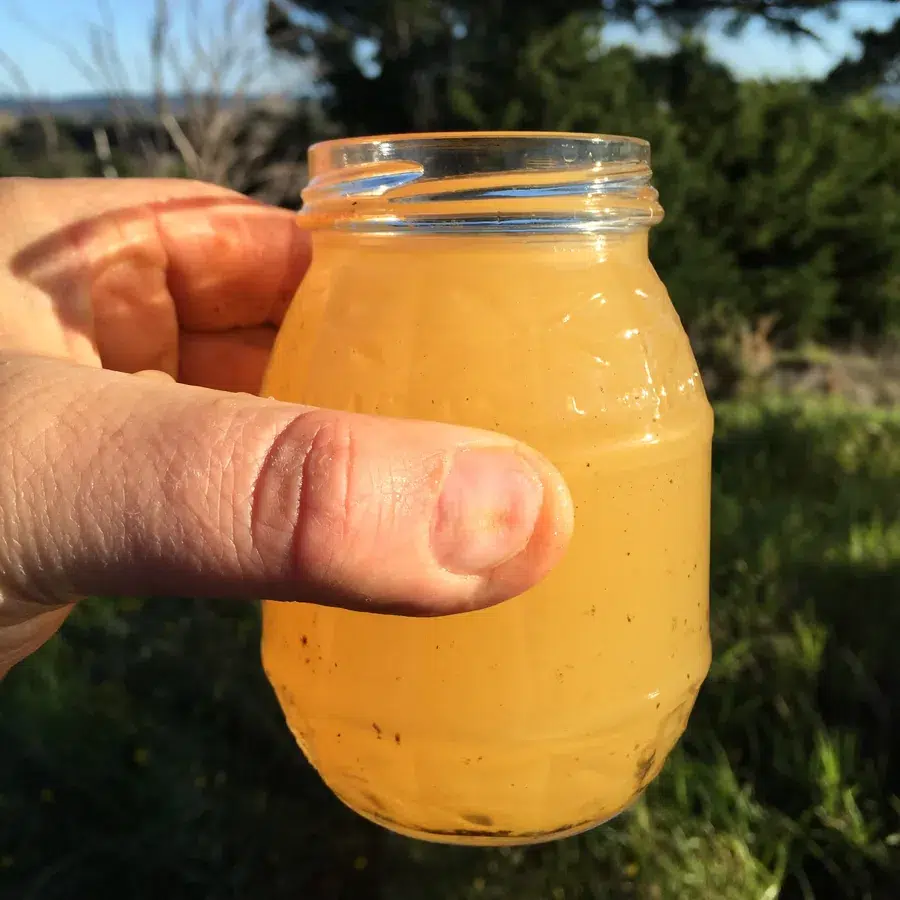
Orange or black water and stains. Dissolved metals need different treatment.
UV water filters
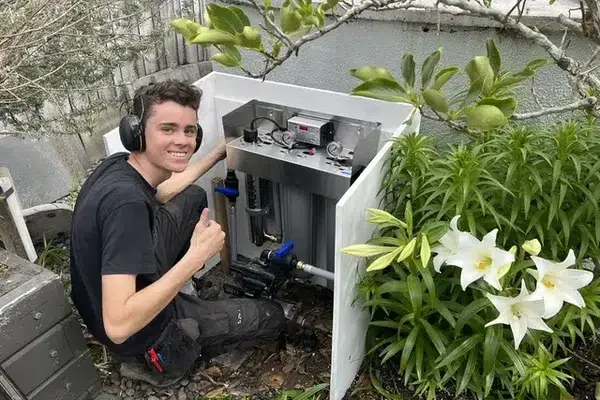
The germ barrier. Sediment filters keep the water clear enough for UV to work.
Filter servicing
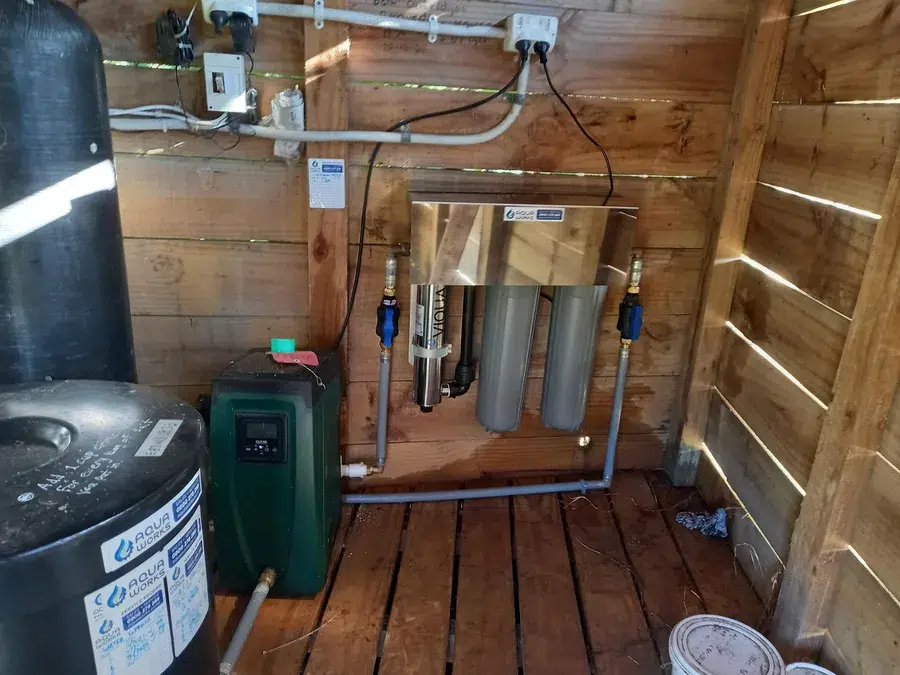
New cartridges every year, with a reminder when it’s due.
Professional installation
Our own registered plumbers install sediment filters across Rodney and North Auckland, from Mangawhai to Albany.
- Matched to your water source and a water test.
- Sized for how much water you use.
- Fitted where the water enters the house, so every tap is filtered.
- Easy to get at, so changing cartridges is quick.
Ongoing service and support
We change your cartridges, flush your screen filter and service your UV at the same visit, and we remind you when it’s due. We service most makes and models: see water filter and softener servicing.
Sediment filter FAQs
What is a sediment filter?
A filter that catches particles in the water: sand, silt, clay, rust and dirt. It’s usually the first stage of a treatment system, so the filters and UV after it can do their job.
Why is my tank water dirty?
Usually dirt washed off the roof, or sludge on the tank floor being stirred up. If the tank is full of sludge, clean it first, then filter the water. The household water supplies guide says to clean tanks at least once a year, and whenever the water turns coloured or cloudy.
Why is my water cloudy or milky?
Pour a glass and watch it. If it clears from the bottom up within a few minutes, it’s tiny air bubbles and harmless. On a pump system, air can come from a leak on the suction side. If it stays cloudy, it’s sediment, and it’s worth testing.
Is cloudy water safe to drink?
Not reliably. Cloudiness can shield germs from UV, and cloudy water often carries germs as well, so it needs filtering before the UV. A water test tells you what’s in it.
What micron sediment filter do I need?
It depends on your water. On tank or bore water we fit two triple gradient cartridges, 70 to 20 micron then 20 to 1 micron, before the UV. UV makers such as Viqua say a filter of 5 micron or finer must go before the UV.
What is a triple gradient sediment filter?
A spun polypropylene cartridge made in three layers, coarse on the outside and fine on the inside. Big particles stop in the outer layer and fine ones further in, so it holds more dirt before it blocks.
How often should I change my sediment filter?
We change them every 6 to 12 months, depending on your water and how much you use. Check them after heavy rain, and change them if they look dirty or your water pressure drops. If they need changing more than once a month, you need extra filtration, such as a screen or media filter.
What is a self-cleaning sediment filter?
A mesh screen in a clear bowl, like the Atlas Filtri Hydra, that catches sand and grit. You can see when it’s dirty, and you open a valve to flush it out. The Hydra has a 90 micron mesh, and an automatic version flushes itself. It goes ahead of the cartridges, not instead of them.
Cartridge or backwashing media filter?
Cartridges suit most homes. A backwashing media filter suits heavy sediment, high flows and sites that use a lot of water every day, because it cleans itself instead of needing new cartridges. It needs a drain and uses some water to backwash. A water test helps us decide.
Why is there sand in my bore water?
A properly built bore shouldn’t produce much sand. Sand usually means a problem with the bore screen or casing, or a pump set too low. It wears out pumps and blocks filters, so get it checked. A self-cleaning screen filter catches it in the meantime.
Will a sediment filter remove bacteria?
No. It catches particles, not germs. You need a UV system to kill bacteria, viruses and parasites, and the sediment filter keeps the water clear so the UV can work.
Don’t just take our word for it…

⭐⭐⭐⭐⭐
“We have an advanced rain water treatment system at our Mangawhai Heads home which includes whole house neutralisation, UV treatment and 3-stage filtration with KDF/GAC, primarily for removal of copper contamination from gutters and down pipes. The system was supplied and installed by Aqua Works and has just had its first annual service by them. We have been totally satisfied with the expert service throughout …”
Richard Mules, 2025
⭐⭐⭐⭐⭐
“… my 12 month annual pump & filter service of the new Dab Pump System and new Ultra Violet filter etc. with Troy of Warkworth Plumbing . Filter doing as designed, removing micro particles and improving drinking water quality a lot.,1 year old filter cartridges were black and were replaced. Pohutakawa Tree leaves ingressing via the gutters after windy weather in autumn. Plus windblown sand which is fairly typical in a beach community like Omaha. …”
John Penman, 2025
⭐⭐⭐⭐⭐
“Steve came out and quoted on installing a UV system and tank filter, which I accepted and was promptly installed. Everything went as expected and site was left clean and tidy afterwards. Steve was great to deal with and gave us some tips for our bore as well. Strongly recommended as great local firm.”
Linda Matheson, 2020
Dirty or cloudy water?
Book a FREE onsite visit. We’ll find the cause and fit the right filters.