
Iron and Manganese in Water
Testing and Treatment for Stain-Free, Great-Tasting Water
Call 0800 278 296 to talk to a water expert
Do you have iron or manganese in your water?
Orange stains in the shower, black marks in the toilet, a metallic taste, or water that turns cloudy after it sits are classic signs of iron and manganese. They’re most common in bore and spring water. Iron and manganese are two of the contaminants in drinking water we help homeowners deal with.
Don’t underestimate the staining and taste. Iron and manganese mark showers, basins, toilets and laundry, and give water, tea and coffee a metallic taste. Iron isn’t a health concern at drinking water levels, but manganese can be, and both can stop a UV system from working properly.
What are iron and manganese?
Iron and manganese are natural metals found in rock and soil. When groundwater has little oxygen, they dissolve into it, so the water can look clear when it comes out of the bore. Once it meets air, they turn into tiny particles that stain, discolour the water and build up in pipes, filters and appliances.
Getting your water tested is the first step. Then we design a system to bring iron and manganese below the levels Taumata Arowai recommends, and protect your UV system.
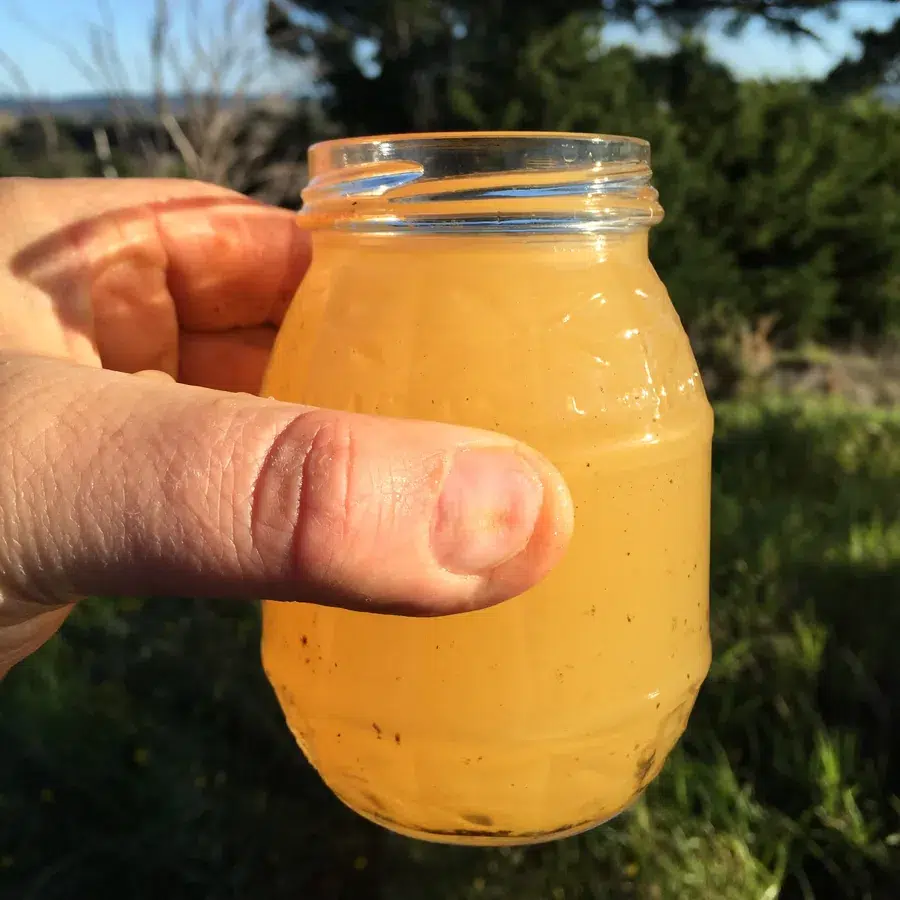
Understanding iron and manganese in your water
Where do iron and manganese come from?
Both occur naturally in rock and soil. Common sources include:
- Bore and spring water, especially from deeper, low-oxygen groundwater
- Rusty steel pipes, fittings or old galvanised pipework
- Old steel tanks
- Some surface water after heavy rain
Signs you have iron or manganese
- Orange or brown stains on showers, toilets and laundry (iron)
- Black or dark brown stains (manganese)
- A metallic taste
- Water that turns cloudy or orange after it sits
- Orange slime in toilet cisterns or filters
- UV alarms, or filters that clog quickly
Could your water be affected?
- Do you use bore or spring water?
- Are you seeing stains you can’t keep on top of?
- Does your UV system keep alarming?
- Do you have old galvanised pipes or a steel tank?
- Are you making baby formula with bore water?
- Has your water never been tested?
Concerned about iron or manganese? Start with testing.
A comprehensive lab test shows your iron and manganese levels, plus hardness, silica, pH and more. In our area these often come together, so the full picture matters. We arrange testing through Hill Laboratories in Hamilton, an accredited lab, and we never specify a treatment system without one.
What doesn’t work
Iron and manganese are often dissolved in the water, so they slip past many everyday fixes.
Common approaches that don’t work include:
- Boiling: it doesn’t remove iron or manganese
- UV filters on their own: they don’t remove metals, and iron and manganese coat the UV sleeve
- Fine sediment filters on their own: they clog fast and miss dissolved iron and manganese
- Scrubbing the stains: they keep coming back until the water is treated
Ozone or a water softener?
We use two main treatments. Ozone tank water treatment works well when iron and manganese levels aren’t too high and the water suits ozone. For higher levels, we install water softeners, which use ion exchange to remove iron, manganese and calcium hardness. We install Ecosoft and Kinetico softeners with ECOMIX® resin.
Why iron and manganese matter for UV
Iron and manganese reduce the amount of UV light passing through the water and build up on the UV quartz sleeve. That can make UV treatment ineffective, so germs aren’t properly treated. It’s a common reason UV systems alarm or under-perform on bore water.
Health and household effects
Long-term exposure to high manganese can affect the nervous system, including memory and coordination
Bottle-fed babies are most at risk from manganese
A metallic taste in drinking water, tea and coffee
Orange and brown stains from iron, black stains from manganese
Build-up in pipes, hot water cylinders and appliances
UV systems that stop treating germs properly
Iron isn’t a health concern, but its staining and taste are a real problem in the home. Manganese is the one to watch for health, especially if you’re making formula for a baby.
How Aqua Works removes iron and manganese
Iron and manganese treatment has to be precise. The system must match your water chemistry, or it won’t work.
1
Test your water
Every job starts with a comprehensive lab test through Hill Laboratories. In our area, iron and manganese often come with calcium hardness and silica, so we need the full water chemistry first.
2
Plan and design
We prepare a detailed plan and system design for your site, matched to your water chemistry, and agree it with you before any work starts.
We never specify a product without a full water test. If the system doesn’t match the water, it won’t work.
3
Install and commission
We install your system, usually ozone tank water treatment or a water softener, then commission it and test the water.
The goal is iron and manganese below the levels Taumata Arowai recommends, so the staining and taste stop.
4
Service and retest
Treating iron and manganese also protects your UV system.
We keep a record of your system, remind you when it’s due for a service and retest your water when needed.
Before and after: high iron in bore water near the Kaipara Harbour
This customer’s bore water had a lot of iron. We tested the water, designed a new system and replaced everything on site.

Before: the old treatment system, stained orange by iron.

The problem: iron clogging the old filter screen.
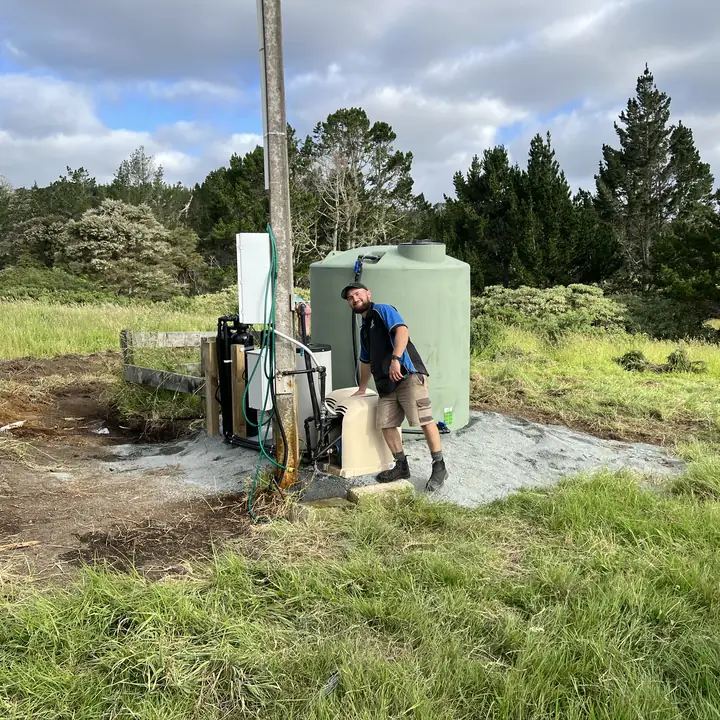
After: a new system, including a Kinetico water softener with ECOMIX® resin. It doesn’t need power to run.
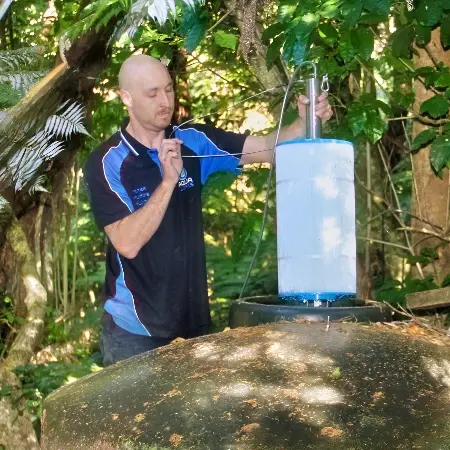
Featured Product
Aquazone Ozone Tank Water Treatment
Treats your whole tank, not just the water flowing through a filter. Ozone turns dissolved iron and manganese into particles that can be filtered out, and kills bacteria and removes smells at the same time.
Why? Call us on 0800 278 296 and talk to our water filtration experts!
Iron and manganese in water FAQs
Is manganese in water harmful?
At high levels, yes. New Zealand’s maximum acceptable value for manganese is 0.4 mg/L. Long-term exposure above this can affect the nervous system, and bottle-fed babies are most at risk. The World Health Organization’s provisional guideline is lower, at 0.08 mg/L.
Is iron in drinking water bad for you?
Not at the levels found in drinking water. There’s no health limit for iron in New Zealand, just an aesthetic target of 0.3 mg/L for taste and staining.
What causes orange stains in my shower or black stains in my toilet?
Orange or brown stains usually mean iron. Black or dark brown stains usually mean manganese, which can stain laundry at levels as low as 0.04 mg/L. A water test confirms which one you have.
How do I remove iron from bore water?
The two systems we use most are ozone tank water treatment, when the levels suit ozone, and a water softener, which uses ion exchange to remove iron, manganese and calcium hardness. Which one is right depends on a comprehensive water test, because pH, hardness, silica and manganese all affect what works.
Can a water softener remove iron and manganese?
Yes. A water softener uses ion exchange to remove iron, manganese and calcium hardness. We install Ecosoft and Kinetico softeners with ECOMIX® resin, which is designed to remove all three together. Kinetico softeners don’t need power to run, which suits remote sites. Every softener is sized and set up from your water test results.
What is iron bacteria in bore water?
Iron bacteria feed on dissolved iron and leave orange-brown slime in toilet cisterns, filters and pipes. They aren’t usually a health risk, but they cause smells, staining and blockages. Treating the iron and disinfecting the system usually brings them under control.
Does boiling remove iron or manganese?
No. Boiling doesn’t remove iron or manganese. They need to be treated and filtered out.
Will iron and manganese affect my UV filter?
Yes. They reduce how much UV light gets through the water and coat the quartz sleeve, which can stop your UV system treating germs properly. Treating iron and manganese first protects your UV system.
Is rainwater tank water affected?
Rainwater is usually low in iron and manganese. If your tank water stains or is discoloured, check for rusty pipes and fittings, an old steel tank, or top-ups from a bore.