
Surface Water Treatment
For streams, dams and springs. We test first.
Book a FREE onsite visit.
Is stream or spring water safe to drink?
Not without treatment. The household water supplies guide (Ministry of Health and ESR) ranks surface water, from streams, rivers, dams and lakes, as the highest-risk water source. Anything upstream can end up in it: stock, birds, farm runoff and wastewater. And it changes fast. Heavy rain or an algal bloom can turn good water bad, so a good test one day doesn’t promise the next.
Most of our customers drink rainwater or bore water, but surface water comes up more often than you’d think. Farms use dam and creek water for stock. Some lifestyle blocks top up their tanks from a stream in a dry summer. And a handful of homes catch a natural spring and feed it into their rainwater tank.
Whatever the source, we test the water first, then design treatment that copes with its worst days, not just the day we tested it.
Start with a free onsite visit.

From the stream to the tap
Surface water needs more than one barrier. Tap a step to find out more.

Ozone in the tank
Our first choice for stream or creek water in a tank. It keeps the stored water clean and often clears colour too.
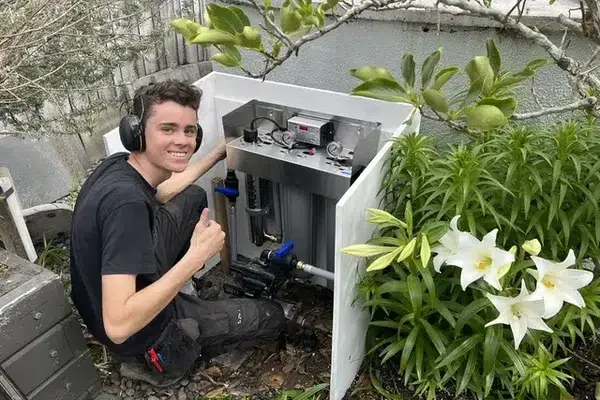
Filters and UV
Filters in stages take out the dirt, then UV kills bacteria and parasites at every tap.

Giardia and Cryptosporidium
Parasites found in stream water. Normal chlorine doses don’t stop them; fine filtration and UV do.

E. coli
A sign of animal or human waste in the water, and found in almost every stream sample in a national study.
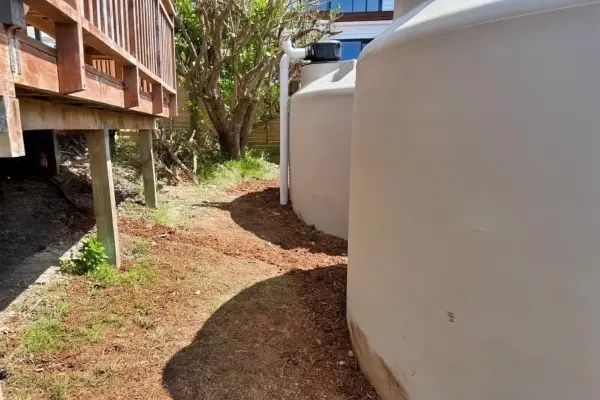
Water tanks
Storing the water first gives the treatment a steadier supply to work with.

Drinking water rules
The regulator’s Acceptable Solutions allow surface water, with extra checks because of the risk.
Why we test surface water first
Before we recommend anything, we take a sample and send it to Hill Laboratories, an accredited lab, for a full test set up just for us. With surface water, the test also needs to look at:
- E. coli and other signs of contamination.
- Tannins and colour, the tea-coloured stain from rotting leaves and plants.
- Organic matter, which clogs filters and soaks up UV light.
- Cloudiness (turbidity), which shields bugs from the UV.
- Iron, manganese, silica and other minerals that change what will work.
The test tells us how to design the system. But surface water changes, after heavy rain, in a drought and with the seasons, so the system has to cope with its worst days too. The household water supplies guide suggests testing for bugs every three months and the chemistry every year. For a home on its own supply that’s guidance rather than a rule, and we’ll help you set up a testing plan that suits your water.
What’s in surface water
In a national study of rivers and streams (1998 to 2000), E. coli turned up in 99% of samples and Campylobacter in 60%. Auckland Council found high E. coli in every rural and urban waterway it monitors. The parasites Giardia and Cryptosporidium live in surface water too, and normal chlorine doses don’t stop them.
Then there’s what you can see. Tannins from rotting leaves stain the water tea-coloured, and fine silt and organic matter cloud it after rain. They clog filters and block UV light, so bugs can get through. In summer, dams and slow streams can grow toxic algae, and UV and boiling don’t remove algal toxins.
Tannins and colour: ozone often works
Ozone breaks down a lot of colour and tannin, and on some water it works brilliantly. It depends on what’s causing the colour, so we test first and sometimes run a trial before we design the system. See ozone tank treatment.
Topping up from a stream or creek
If you pump stream or creek water into your tank, ozone in the tank is our first choice. It keeps the stored water clean between top-ups. Take water when it runs clear, not straight after heavy rain, and never from a dam or stream with an algal bloom. Then filters and UV protect every tap.
Catching a spring
A spring is groundwater, but a shallow spring can act like surface water after heavy rain. Build a bund around the intake so runoff can’t get in, keep stock at least 5 metres away, and treat it like stream water: ozone in the tank, then filters and UV.
Signs your surface water needs attention
Brown or tea-coloured water.
Cloudy water after rain.
An earthy or musty smell.
Green scum or algae in the dam.
Filters that block up fast.
Someone in the house has been sick.
Stock near the stream, dam or spring.
No UV system, or a UV lamp older than a year.
No water test since you started using it.
What we install
- Ozone in a storage tank.
- Filters in stages, down to fine filtration.
- UV systems.
- Water tanks to store the water first.
- Pumps to move the water.
What we service
- Ozone systems.
- UV systems and filters.
- Pumps.
- Water tanks.
Safe water from a stream or spring, at every tap.
Streams, dams and springs
The three kinds of surface water we see most.
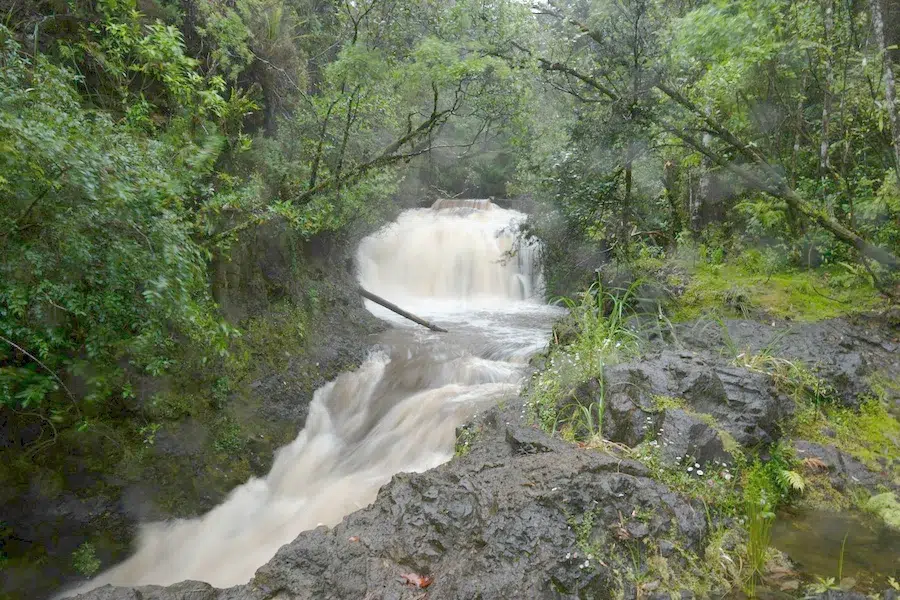
Streams and creeks run brown after heavy rain, from tannins and silt. Take water when it runs clear.
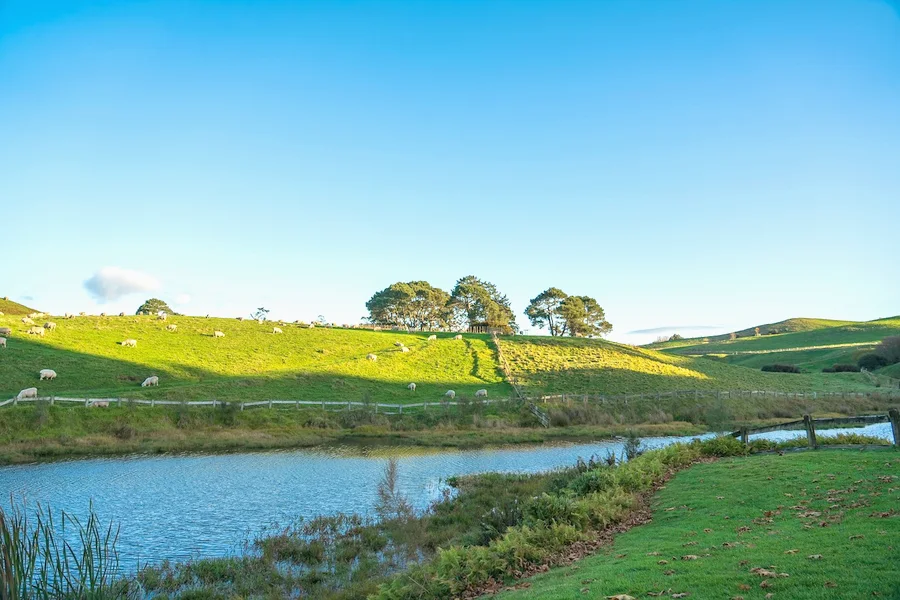
Farm dams are mostly for stock. In summer they can grow algae, and UV doesn’t remove algal toxins.
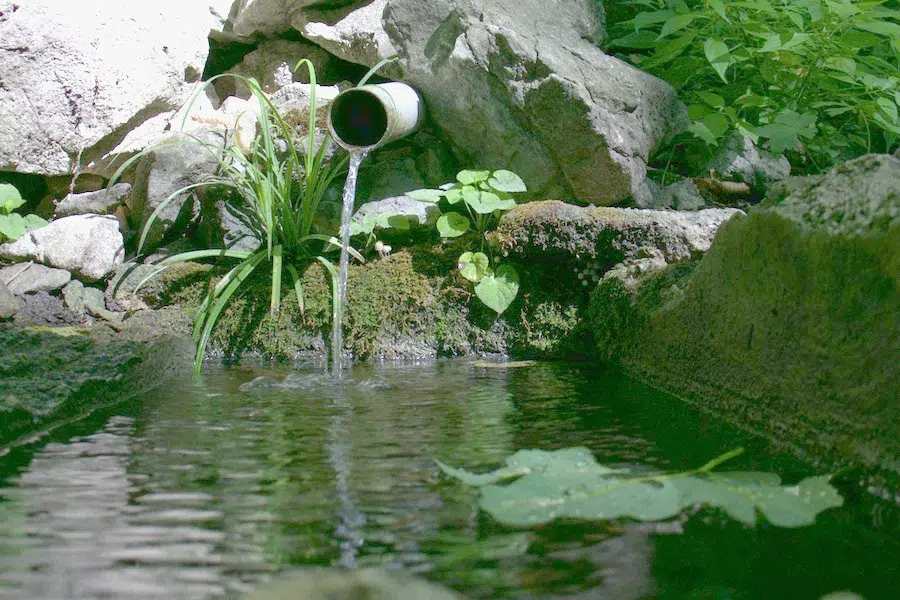
Springs are groundwater, but a shallow spring can act like surface water after rain. Keep runoff and stock away from the intake.
Look after the source
Put the intake upstream of anything that could pollute the water, screen it, and keep stock away. If the water turns dirty after rain, shut the intake off until it runs clear. A storage tank between the source and the house helps, because treatment works best on a steady supply.
For a spring, build a bund around the intake so surface runoff can’t mix in, and fence stock at least 5 metres away.
Taking water from a stream
You can often take a small amount of water for household use without a consent, as long as you meet your council’s conditions. In Auckland, that’s up to 5 cubic metres a day from a stream or spring, with notice to the council 15 working days before you start. Northland Regional Council has its own rules.
Check with your council first. Renting out or selling a home on surface water? See safe water for rural rentals and sales.
How we sort your surface water
Every job follows the same four steps.
1
Free onsite visit
We look at the source, the intake, any storage tank and the treatment you already have.
2
Test the water
We send a sample to an accredited lab for a full test, then go through the results with you.
3
Design and install
We design a system for your water and its worst days, then install, commission and test it.
4
Service every year
New filters and UV lamp, the ozone and pump checked, and a reminder when it’s due.
Professional installation
Our own registered plumbers install surface water systems across Rodney and North Auckland, from Mangawhai to Albany.
- Designed around your water test.
- Built in layers: storage, ozone, filters, then UV.
- Pipes sterilised after the install.
- Commissioned and tested before we leave.
Ongoing service and support
Surface water is hard on a treatment system, so every system needs a service at least every 12 months. We change the filters and UV lamp, check the ozone system, pump and tank, and remind you when your next service is due.
Surface water FAQs
Is stream water safe to drink?
Is spring water safe to drink?
Not until it’s been tested and treated. A spring is groundwater, but a shallow spring can act like surface water after heavy rain. Keep runoff and stock away from the intake, and treat it with filters and UV.
How do you treat stream or creek water?
We test it first, then build the system in layers: a storage tank, ozone in the tank, filters in stages, then UV at the house. Ozone is our first choice for stream or creek water, because it keeps the stored water clean.
Can you remove tannins and brown colour?
Often, yes. Ozone breaks down a lot of tannin and colour, and on some water it works brilliantly. It depends on what’s causing the colour, so we test first and sometimes run a trial before we design the system. See ozone tank treatment.
Can I top up my rainwater tank from a stream?
You can, but then your tank water needs treating like stream water: ozone in the tank, then filters and UV. Only take water when it runs clear, never from a dam or stream with an algal bloom, and check your council’s rules first.
Does UV get rid of algal toxins?
No. UV kills bugs, but it doesn’t remove the toxins some algae make, and neither does boiling. Don’t take water from a dam or stream with a bloom; use another source until it clears.
Do I need a consent to take water from a stream?
Not always. Small takes for household use are often allowed if you meet your council’s conditions. In Auckland that’s up to 5 cubic metres a day from a stream or spring, with notice to the council first. Check with your council before you start.
How often should I test surface water?
The household water supplies guide suggests testing for bugs every three months and the chemistry every year. For a home on its own supply that’s guidance, not a rule. Because surface water changes so fast, we design the treatment to cope with its worst days and service it every year.
How much does surface water treatment cost?
It depends on the water and the site, so we quote after a free onsite visit and a lab test.
Don’t just take our word for it…

⭐⭐⭐⭐⭐
“Steve and his team are the best. We’ve used them to filter water and resolve problems for four of our houses, with zero complaints! They are knowledgeable, speedy and so kind! Would recommend. Will use again!”
Jenna Binnie, 2026
⭐⭐⭐⭐⭐
“We just had our first UV and filter change for the water system at our bach. Really friendly service tech who talked through what was happening and showed me how the filters looked. They seem to be a really professional team of locals. Great job”
Mike Forsythe, 2026
⭐⭐⭐⭐⭐
“Great team, Aqua Works have been servicing and replacing our filters since we built 10 years ago. Friendly, helpful, cost effective and they know their stuff.”
Joanna Clough, 2025
Using stream or spring water?
Book a FREE onsite visit. We’ll test it and design treatment that copes with its worst days.