

Every hot water cylinder wears out in the end. The question is whether yours is worth repairing, or whether it’s time for a new one. Here are the signs to look for, how to tell how old your cylinder is, and how we help you decide.
If your cylinder has just stopped working, start with how to tell if your hot water cylinder is broken. Many faults are a simple repair.
How long does a hot water cylinder last?
It depends on the cylinder and, above all, on your water. When the water is right, particularly its pH and hardness:
- A good quality mains pressure cylinder lasts 10 to 20 years.
- A new low pressure cylinder lasts about the same, 10 to 20 years.
- Old-style copper low pressure cylinders are the long-lasting ones: 30 to 40 years, and we still find some working after 40.
If the water isn’t right, a cylinder can need replacing every 6 to 12 years.
Why your water matters
Bore water and rainwater can be hard on a cylinder if they aren’t balanced. Water with a low pH (acidic water) eats copper and breaks down the enamel lining of a mains pressure cylinder, and even stainless steel can corrode when the water going into it isn’t balanced. Around here we also often see silica in bore and tank water, which builds up inside cylinders.
What 12 years of unfiltered tank water does to a cylinder
This mains pressure cylinder came out of a rural home in October 2026. It had run on rainwater with no filtration for 12 years. When we drained it in our yard, this is the sediment that came out, and the inlet sits about 60mm above the bottom of the cylinder, so it’s only what could drain out through it.
Whatever washes off the roof into your tank, and isn’t filtered out, goes through your pipes and settles in the bottom of your hot water cylinder. It upsets the pH and balance of the water, and it’s one of the reasons rural cylinders fail.
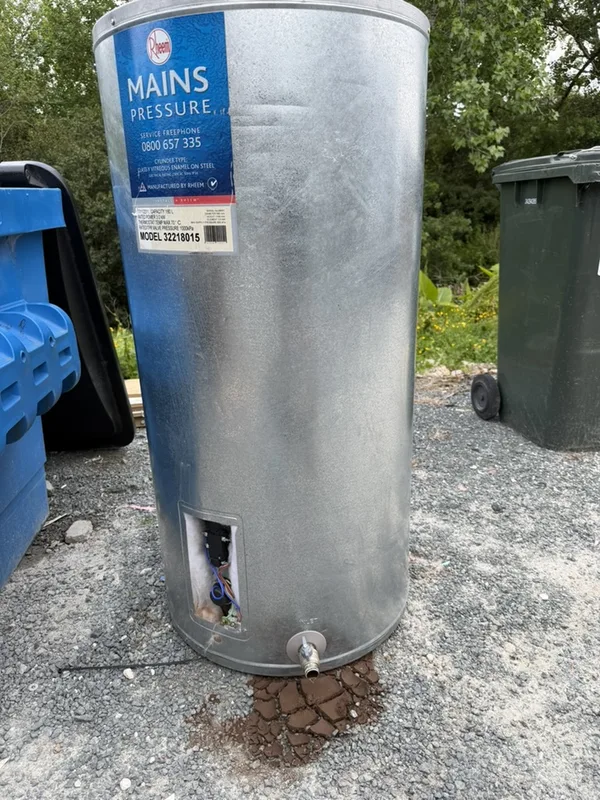
Pulled out of a rural home after 12 years on unfiltered tank water.
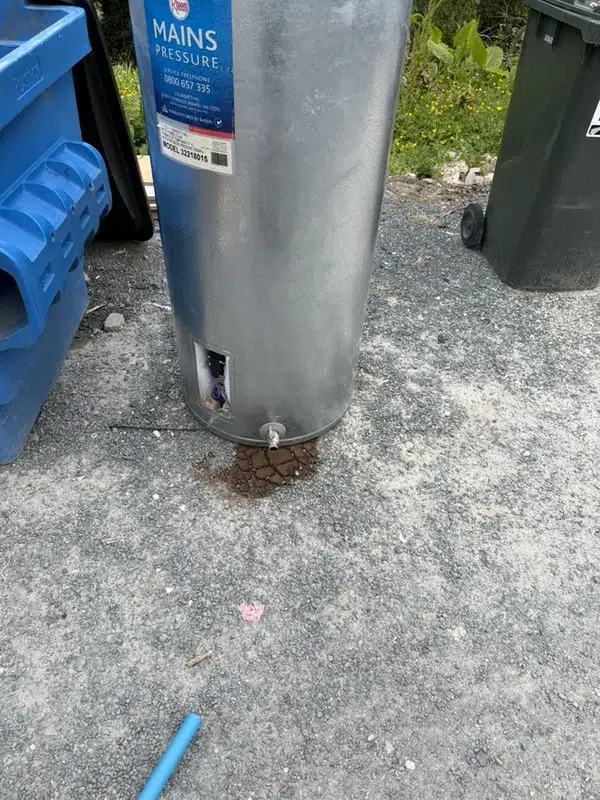
Drained in our yard: all of this came out of the cylinder.
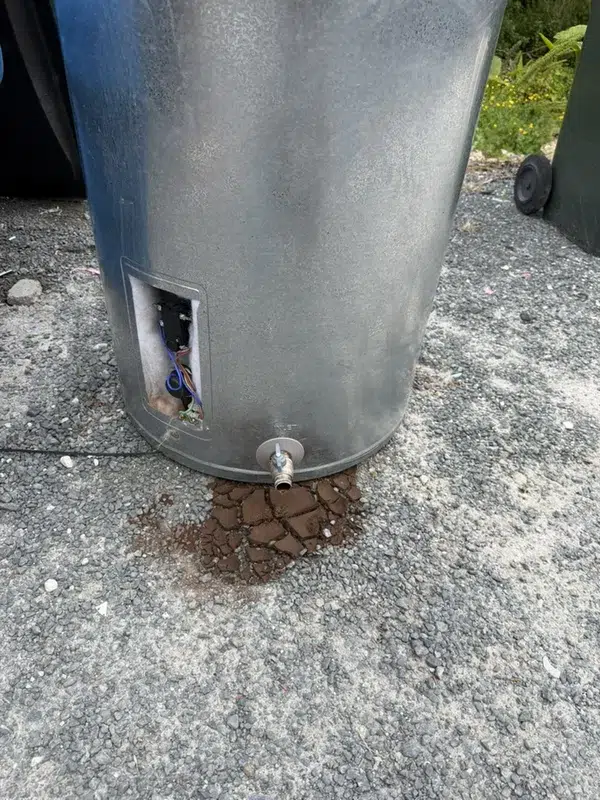
It came out through the inlet, which sits about 60mm above the bottom of the cylinder.
Get the water right first. Your water should be balanced and meet the drinking water standards. That matters for your health, and it matters for your hot water cylinder, pipes, tapware and fittings too. In our view every rural home on tank or bore water should have a UV water filter system anyway. It comes with whole house filtration, so it also stops sediment reaching your cylinder. A water test shows whether the pH or hardness needs correcting. We can test it and recommend treatment, so your next cylinder lasts.
How old is yours? Look for the label on the side of the cylinder. It shows the date it was made. We still come across cylinders from the 1990s, like the 1996 one below.
A regular service helps a cylinder last longer: see hot water cylinder repairs and servicing.
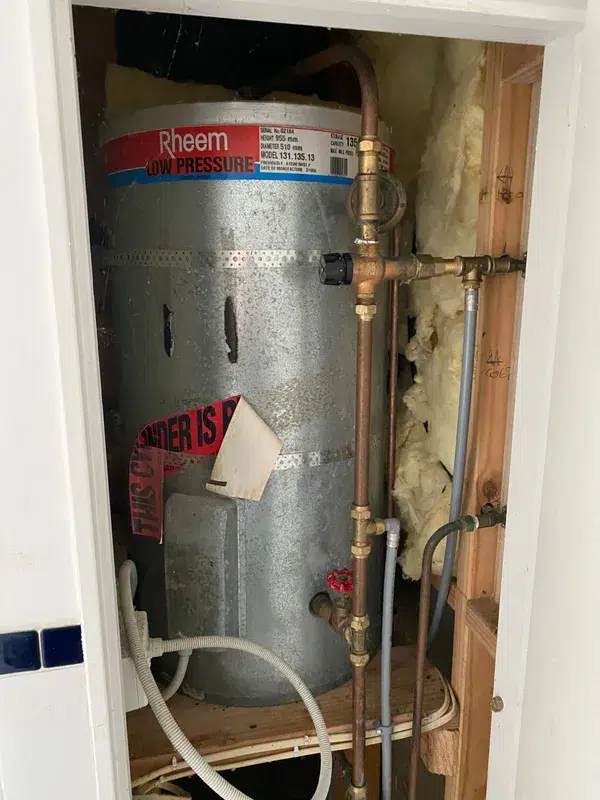
A 1996 low pressure cylinder, due for replacement.
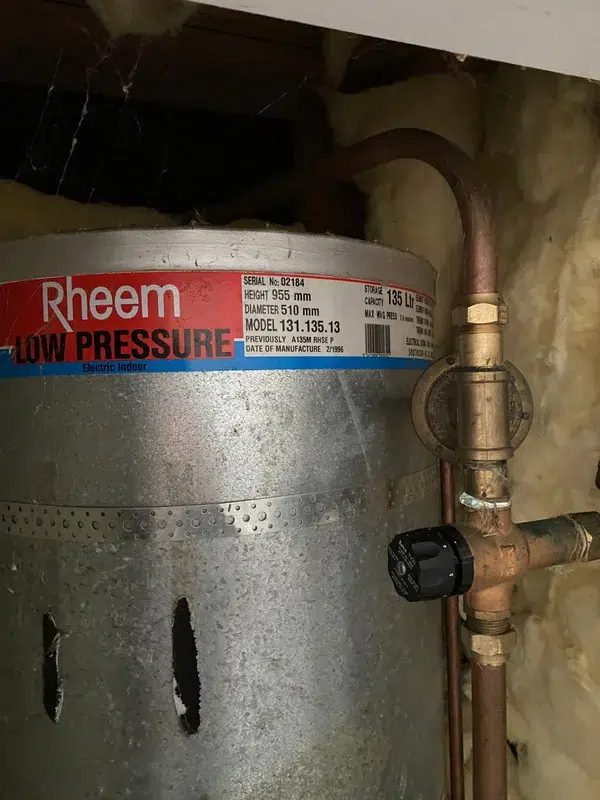
The label on the side shows when it was made. This one: February 1996.
7 signs your hot water cylinder needs replacing
1. Water is leaking from the tank
This is the clearest sign. If water is coming from the cylinder itself (the base, a seam or a rusty patch), the inside has corroded through and it can’t be repaired. A leak from a valve, a fitting or the element seal is different: that can usually be fixed. Turn off the power and the cold water to the cylinder and call us. If it’s leaking now, see emergency hot water.
2. Rusty or brown hot water
If the cold water is clear but the hot water comes out brown or rusty, the tank may be corroding from the inside. On an older cylinder, that usually means it’s near the end of its life.
3. It’s old and starting to play up
Age alone isn’t a reason to replace a cylinder that works well. But if it’s getting old and faults are starting, it’s worth planning a replacement before it fails, rather than waiting for a leak or a cold shower.
4. Repairs keep adding up
One new element or valve is a normal repair. If you’re calling a plumber every few months, a new cylinder can work out better over time.
5. You keep running out of hot water
If the household has grown, the cylinder may simply be too small now. A failing element or thermostat can cause the same problem, so we check that first.
6. Weak pressure from an old low pressure cylinder
Many older homes still have a low pressure cylinder, and the flow is weak, especially upstairs or with two showers running. Upgrading to a mains pressure cylinder gives strong, even pressure. On tank water, a mains pressure cylinder needs a pump that can keep up: see water pumps.
7. Strange noises, smells or overheating
Popping from scale build-up, a rotten-egg smell, or steam from a drain pipe can often be fixed. But on an old cylinder with other problems, they can be the sign it’s time. See what different noises and smells mean.
Repair or replace?
Here’s how we usually see it:
- Usually worth repairing: a failed element or thermostat, a faulty valve (pressure limiting, expansion, relief or tempering valve), a leaking element seal, or a worn anode.
- Usually time to replace: a leaking tank, rusty hot water from an old cylinder, repeated faults on an old cylinder, a cylinder too small for the household, or when you want to upgrade from low pressure.
We’ll check it on site and give you honest advice. If a repair is the better option, we’ll say so.
Hot water cylinder not working?
No hot water doesn’t automatically mean a new cylinder. Often it’s the element, the thermostat or a tripped switch. Check the switchboard first, then see what to check when your hot water cylinder isn’t working.
Hot water element replacement
The element heats the water, and the thermostat switches it on and off to hold the temperature. If the element fails, you get no hot water or water that heats very slowly, but the cylinder itself is often fine. Replacing an element or thermostat is a common repair, and it’s work for a licensed plumber and electrician.
The thermostat matters for health too. Under the NZ Building Code, stored hot water should be kept at 60°C or more so Legionella bacteria can’t grow. If the thermostat fails, the water can sit too cool.
What happens when we replace your cylinder
- Free site visit. We look at your cylinder and talk through what you need.
- Options and a written quote. Like for like, an upgrade to mains pressure, or a heat pump water heater.
- Installed, usually in a day. We fit the new cylinder, valves and seismic restraints to the NZ Building Code, and take the old one away.
- Tested and explained. We check everything works and show you how it runs.
See hot water cylinder replacement and installation for the details, or heat pump water heaters if you want to cut running costs.
Can I replace a hot water cylinder myself?
No. Installing a hot water cylinder is work for a licensed plumber, and the wiring for a licensed electrician. The new cylinder needs the right valves and seismic restraints, and the work has to meet the NZ Building Code.
Where we work
We replace and repair hot water cylinders from Mangawhai to Albany, including Warkworth, Matakana, Omaha, Leigh, Snells Beach, Orewa, Silverdale, Millwater, Dairy Flat and Coatesville. See all our hot water services, or hot water cylinder repairs if yours just needs fixing. We work on all the common brands, including Rheem, Stanley, Simplex, Rinnai, Bosch, Thermann and Dux.
Local to Rodney?
Thinking about a new hot water cylinder? We replace and repair cylinders right across Rodney and North Auckland, from Mangawhai to Albany. Give us a call and we’ll come out, look at your cylinder and give you honest advice.
Replacing a hot water cylinder: FAQs
How long does a hot water cylinder last?
A good quality mains pressure cylinder lasts 10 to 20 years, and so does a new low pressure cylinder. Old-style copper low pressure cylinders can last 30 to 40 years. That assumes your water is right: if the pH or hardness isn’t, a cylinder can need replacing every 6 to 12 years.
Can my water shorten the life of my hot water cylinder?
Yes. Bore water and rainwater that aren’t balanced can break down the enamel lining of a cylinder and eat copper, especially when the pH is low. Even stainless steel can corrode. Unfiltered tank water also leaves sediment in the bottom of the cylinder. A water test shows whether your water needs treating.
When is it time to replace a hot water cylinder?
When the tank is leaking or rusting, the faults keep coming, or it’s too small for the household. A new element, thermostat or valve can keep a sound cylinder going, so we check that first and give you honest advice on site.
How do I find out how old my hot water cylinder is?
Check the label on the side of the cylinder. It shows the date it was made.
Can I replace a hot water cylinder myself?
No. Installing a hot water cylinder is work for a licensed plumber, and the wiring for a licensed electrician. It needs the right valves and seismic restraints, and has to meet the NZ Building Code.
Should I replace my old cylinder with a heat pump water heater?
It can be a good choice if you want to cut running costs. A heat pump water heater uses the air to heat water, so it uses less power. We’ll check whether it suits your home. See heat pump water heaters.