
Campylobacter in Water
Testing and Rural Water Treatment Solutions
Call 0800 278 296 to protect your family!
Do you have Campylobacter in your drinking water?
The largest water contamination outbreak in New Zealand history was caused by Campylobacter (Harvelock North, 2016). Alarming, Campylobacter is one of the most common causes of waterborne gastrointestinal diseases in New Zealand, with thousands of cases every year. And it can enter your drinking water without warning.
The risk is real, especially for homes using tank or untreated water.
What is Campylobacter in water?
Campylobacter is a bacterium commonly found in animal faeces that can contaminate water supplies through environmental runoff or poor water protection. Once ingested, it can cause infection and gastrointestinal illness.
At Aqua Works, we provide free onsite water testing to identify contamination risks and ensure your drinking water is properly assessed. With over 20 years of experience working with local water conditions, we design and install proven filtration and disinfection systems that deliver safe, reliable water for your home.

Contaminated water doesn’t always look unsafe
Campylobacter contamination has already caused the largest drinking water outbreak in New Zealand, affecting thousands of people from a supply that appeared completely normal.
If your water hasn’t been properly tested, you may not know the risk.
Understanding the risk of Campylobacter in your drinking water
How does Campylobacter get into water?
Campylobacter typically enters water through contamination from:
- Animal waste (livestock, birds, wildlife)
- Rainfall runoff into water sources
- Poorly protected tanks or bores
Heavy rain events can wash contaminants into water supplies, eg. Havelock North outbreak where runoff contaminated bore water.
Why Campylobacter is a risk in rural tank water in NZ?
- Rainwater tanks
- Bore water
- Untreated rural supplies
are at higher risk of contamination.
In NZ, untreated drinking water continues to be linked to cases of waterborne disease, particularly in rural areas. Proper treatment is essential to ensure safe drinking water.
When should you be concerned?
- Your water is untreated or not regularly tested
- You rely on tank or rural water
- Your system is exposed to environmental contamination
- There has been heavy rainfall or runoff
Campylobacter contamination is often not visible and can go unnoticed until symptoms appear.
What DOESN’T work
Many homeowners assume their water is safe or rely on basic treatment. However, Campylobacter contamination is often associated with faecal contamination from animals and environmental runoff. and can persist in untreated or poorly managed water supplies.
Common approaches that don’t provide reliable protection include:
- Drinking untreated tank or rural water
- Relying on basic filters that are not designed to remove bacteria
- Assuming clear water is safe
- Not testing water regularly, especially after rainfall
- Using systems that are not properly maintained
Campylobacter can survive in water for extended periods. For consistent, long-term protection, a properly designed filtration and disinfection system is essential.
Health risks associated with Campylobacter infection
Diarrhoea, which can sometimes be severe and that may contain blood
Stomach cramps
Nausea and vomiting
Dehydration caused by fluid loss
Fever
In severe cases, complications can occur, and large outbreaks have led to hospitalisations and long-term health effects.
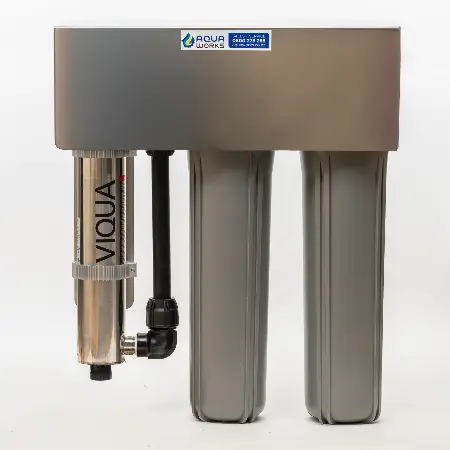
Featured Product
AQUA BLUE Jumbo Whole House System
This is the best 3-stage water filter system for clean drinking water at home.
Why? Call us and talk to our water filtration experts!
How Do you know if your water has Campylobacter?
Campylobacter contamination cannot be seen, tasted or smelled, which means water can appear completely safe while still posing a health risk.
Testing for Campylobacter directly is complex, so water is typically tested for E. coli, which indicates faecal contamination. If E. coli is present, there is a high likelihood that harmful bacteria such as Campylobacter may also be in your water.
Campylobacter testing is usually only done during outbreak investigations and for source water risk assessments.
Aqua Works can arrange professional water testing and guide you through the next steps if contamination is detected. We work together with an accredited lab to get the best results for you.
How Aqua Works solves Campylobacter problems
Campylobacter contamination requires more than basic filtration — it must be reliably removed and controlled to ensure safe drinking water.
At Aqua Works, we design and install tailored treatment systems that combine high-quality filtration and proven disinfection technologies such as UV filtration systems and ozone tank water treatment. These systems are specifically configured for your water source, whether tank, bore or rural supply.
UV disinfection neutralises bacteria as water flows through the system, while ozone treatment helps eliminate contaminants and improve overall water quality straight in the water tank. Together, these technologies provide safe, pathogen-free water throughout your home.
With the right system in place, you can be confident your water is clean, safe, and protected long-term.
It happened in New Zealand — Don’t take the risk
Campylobacter caused New Zealand’s largest drinking water outbreak, making over 5,500 people sick from a supply that appeared safe.
If your water hasn’t been properly tested and treated, you may not know the risk to your household.
FAQ about Campylobacter in Water
What is Campylobacter in drinking water?
Campylobacter is a bacteria found in animal faeces that can contaminate drinking water through environmental runoff, poor tank protection or untreated water sources. It can cause gastrointestinal illness when ingested.
How do you get Campylobacter from water?
People become infected by drinking contaminated water, especially from untreated supplies such as rainwater tanks, bore water or surface water exposed to animal waste.
Is Campylobacter common in New Zealand?
Yes, Campylobacter is one of the most common causes of gastrointestinal illness in New Zealand, with thousands of cases reported every year.
Is rain water safe to drink in NZ?
Rainwater can be safe, but only if it is properly treated. Without filtration and disinfection, it is at higher risk of contamination from animals, birds and environmental runoff.
Can you see or taste Campylobacter in water?
No. Campylobacter contamination cannot be seen, tasted or smelled. Water can appear completely clean and still be unsafe to drink, which is why testing and proper treatment are essential.
How do you test for Campylobacter in drinking water?
Campylobacter is difficult to test for directly, so water is typically tested for E. coli, which indicates faecal contamination. If E. coli is present, there is a strong likelihood that harmful bacteria such as Campylobacter may also be in the water.
What level of Campylobacter is safe in drinking water?
There is no safe level. Campylobacter should not be present in drinking water, and any indication of contamination means the water should be treated as unsafe until properly managed.
Does rain increase the risk of Campylobacter in water?
Yes. Heavy rainfall can wash animal waste and contaminants into water sources, increasing the risk of Campylobacter contamination — especially in tank, bore and rural water supplies.
Will a standard household filter remove Campylobacter?
No. Most basic filters are not designed to remove bacteria. Effective protection requires a properly designed system that includes filtration and disinfection, such as UV desinfection or ozone tank water treatment.
Why Choose Aqua Works
Understanding of Water Risks in New Zealand
We know where these Campylobacter risks come from — especially in rural areas, tank water systems and properties exposed to environmental contamination.
Experts in Tank, Bore and Rural Water Systems
We understand Rodney’s water conditions and how to treat them effectively.
We Match the Right Solution to Your Water — Not a One-Size-Fits-All System
We assess your situation and design a system that delivers safe, reliable drinking water tailored to your home.
Proven Treatment That Targets Bacteria at the Source
Our systems combine filtration and disinfection technologies such as UV and ozone to ensure effective protection.
Complete Service: Test – Design – Install – Maintain
We don’t just install equipment. We test your water, design the right solution, install it properly and provide ongoing servicing to ensure long-term safety.
Local Experience You Can Trust
With over 20 years working with water systems across Rodney and surrounding areas, we understand local conditions, common risks and what actually works.